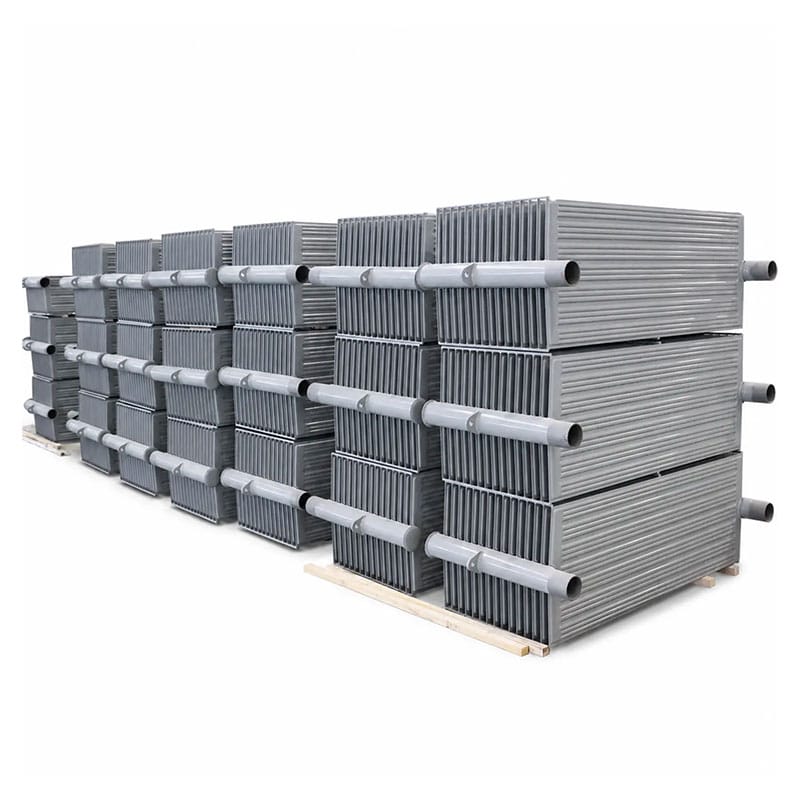
Transformer radiator dimensions are not simply catalogue numbers. Center distance, panel width, panel pitch, panel quantity, connection geometry, overall height, overall width, flange position, and mounting orientation all affect whether a radiator can be installed correctly on an oil-immersed transformer and whether it supports the intended cooling arrangement.
For transformer manufacturers and project buyers, the most common dimensional mistake is to choose a radiator by one visible number—often center distance or panel count—without checking the complete tank interface. A radiator can have the correct center distance and still be unusable because the flange pattern, connection size, total width, header position, panel pitch, or installation envelope does not match the transformer drawing.
Este guia explica como especificar transformer radiator dimensions before ordering. It focuses on center distance, panel width, pitch, panel count, overall geometry, fixed versus detachable interfaces, flange details, oil connections, installation clearances, transport, replacement radiators, inspection, and RFQ data.
Why Transformer Radiator Dimensions Need More Than One Number
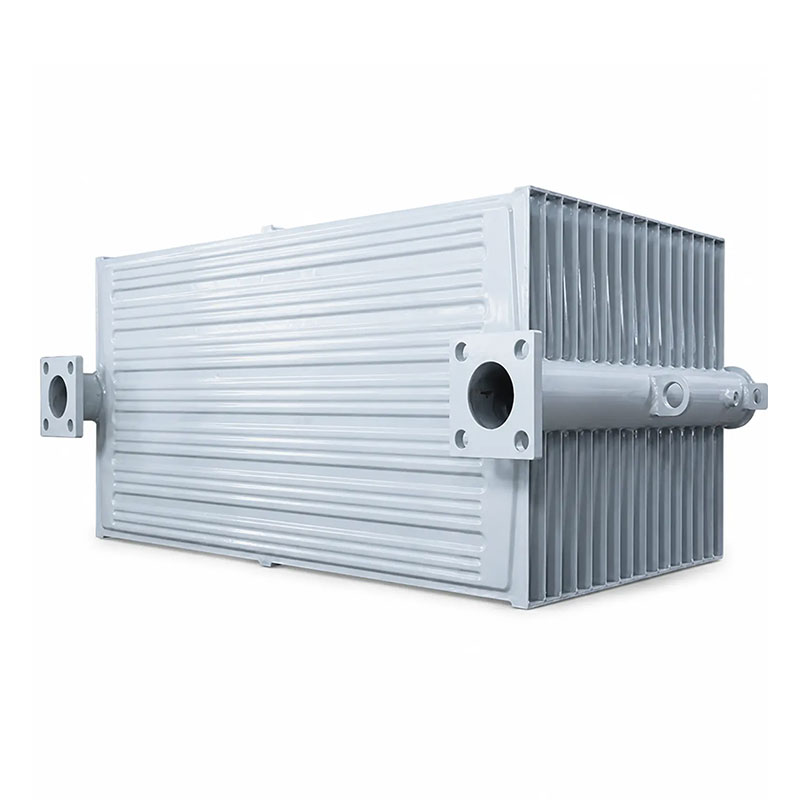
A transformer radiator is both a heat exchanger and a mechanical component. It must fit the tank, provide enough cooling surface, allow oil circulation, remain within the installation envelope, and survive fabrication, transport, assembly, and service.
Prennox currently publishes the following dimensional ranges for both its Radiador de transformador destacável tipo PC e Radiador de transformador fixo tipo PG:
| Parâmetro | Published Range | What the Buyer Still Needs to Confirm |
|---|---|---|
| Largura do painel | 480/520mm | Which width matches the thermal and mechanical design |
| Distância central | 5000m3 | Exact tank connection centerline |
| Painel pitch | 40/45mm | Required total width and airflow spacing |
| Quantidade painel | 5–35 | Required cooling surface and bank width |
| Panel thickness | Customized | Mechanical requirement and approved drawing |
These are manufacturing ranges, not a ready-made thermal selection table. Correct transformer radiator dimensions must come from the approved transformer layout and thermal design.
Center Distance Is the First Dimension to Confirm
Center distance is one of the most important transformer radiator dimensions. It generally refers to the vertical distance between the centerlines of the upper and lower radiator connections.
This value controls how the radiator aligns with the tank connection points. It also influences radiator height and can affect natural oil circulation because vertical separation contributes to the thermosiphon effect in naturally circulated systems.
However, center distance is not the same as total radiator height. Overall height may include headers, flanges, end plates, lifting features, or other structural elements.
For a new transformer, center distance should be taken from the approved tank and cooling-system drawing. For a replacement radiator, it should be measured from the actual connection centers or verified from the original drawing.
Do Not Measure Overall Height and Assume It Is Center Distance
This is a common field-replacement mistake. The physical top-to-bottom height of the radiator may differ from the centerline distance between the oil connections.
Quando transformer radiator dimensions are being collected for a replacement order, the buyer should identify the exact datum used for the measurement.
Panel Width Affects Cooling Surface and Overall Geometry
Panel width is another key dimension. Prennox currently publishes 480 mm and 520 mm panel widths for both its fixed and detachable radiator product families.
A wider panel can increase available heat-transfer surface, but it also changes radiator mass, tank clearance, and overall geometry. The correct panel width should therefore come from the approved thermal design rather than from the assumption that wider is always better.
Em a transformer radiator dimensions review, panel width should be checked together with center distance, panel quantity, pitch, and bank arrangement. One dimension alone does not determine the cooling surface.
Panel Pitch Controls Spacing Between Adjacent Panels
Panel pitch is the center-to-center spacing between neighboring radiator panels. Prennox currently publishes 40 mm and 45 mm options.
The pitch affects total radiator width and the air space available between adjacent panels. A smaller pitch can allow more panels within a limited width, but closely packed panels can also influence natural airflow and coating access.
A larger pitch creates more spacing but increases the total width for the same number of panels.
Para transformer radiator dimensions, panel pitch therefore needs to be coordinated with the installation envelope, radiator quantity, air movement, and manufacturing design.
Panel Quantity Changes More Than Cooling Area
It is easy to think that adding more panels simply adds more cooling. In practice, panel quantity also changes radiator width, oil volume, mass, mounting loads, transport dimensions, and the relationship between adjacent panels.
Prennox currently lists 5–35 panels as a manufacturing range. This does not mean every number in that range is thermally validated for every center distance or panel width.
O anterior Guia de dimensionamento do radiador do transformador explains why panel quantity should be selected from transformer losses, temperature-rise requirements, oil circulation, ambient conditions, and cooling mode.
A transformer radiator dimensions order should therefore use the panel quantity from the approved thermal design, not from catalogue convenience.
Overall Radiator Width Must Be Checked Against the Transformer Envelope
Panel quantity and pitch combine to determine a major part of the radiator bank width. Headers, end plates, flanges, valves, lifting lugs, and side clearances can add further width.
This is important because a transformer can meet its electrical design and still exceed the permitted shipping or installation envelope.
When reviewing transformer radiator dimensions, buyers should calculate both the radiator-only envelope and the complete transformer envelope with all radiator banks installed.
For detachable radiators, the shipping configuration may be smaller because radiator banks can be packed separately. For fixed radiators, the installed bank may remain part of the transport envelope.
Fixed and Detachable Radiators Need Different Interface Dimensions
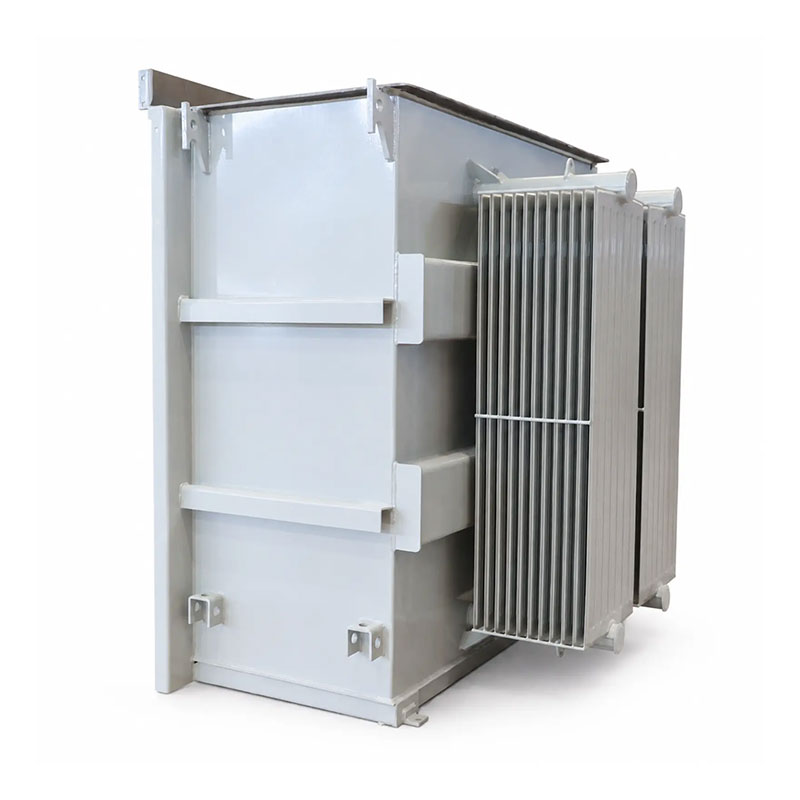
Connection type is one of the major dimensional differences between Prennox’s PC and PG radiator products.
The PC detachable radiator uses flange connections. Therefore, the buyer needs to specify flange dimensions, bolt-hole pattern, oil opening, mating surface, connection projection, and orientation.
The PG fixed radiator is manufactured according to the transformer drawing for permanent installation. Its tank connection dimensions should therefore be defined directly from the approved transformer tank layout.
O Guia de seleção de radiador de transformador fixo versus removível explains the lifecycle difference between these two configurations.
| Item de interface | Radiador fixo | Radiador destacável |
|---|---|---|
| Connection basis | According to transformer tank drawing | Flange-mounted removable interface |
| Critical dimensions | Connection position, opening geometry, weld interface | Flange size, bolt pattern, opening size, gasket surface |
| Montagem campo | Normally limited if shipped installed | May require gasket, flange alignment and controlled tightening |
| Replacement strategy | More integrated with tank | Can support removable bank replacement |
Flange Dimensions Must Be Fully Defined for Detachable Radiators
For a detachable radiator, “flange connection” is not enough information. The complete flange geometry must match the transformer tank.
Um prático transformer radiator dimensions specification for a detachable radiator should include flange outer size, thickness, oil opening, bolt-circle or hole coordinates, hole diameter, bolt quantity, gasket contact area, connection projection, orientation, and upper/lower flange centerlines.
CEI 60076-22-2:2019 specifically applies to removable radiators mounted on liquid-immersed transformers. It covers service conditions, mechanical and operating requirements, preferred dimensions relevant to interchangeability, and type and routine tests.
This makes the standard particularly relevant when transformer radiator dimensions are being defined for detachable radiator banks.
Header and Oil-Connection Geometry Affect Oil Circulation
The radiator is part of an oil circuit. The upper and lower connections must not only fit mechanically; they also need to support the intended oil circulation.
In naturally circulated systems, hot oil rises toward the upper radiator connection and cooled oil returns through the lower connection. Connection diameter, elevation, pressure drop, header geometry, and internal radiator channels all affect this flow.
A transformer radiator dimensions drawing should therefore include the oil opening size and connection geometry when those features are part of the radiator supply.
The buyer should not assume that two radiators with the same center distance and panel count will have identical hydraulic performance if their headers and connections differ.
Overall Height and Installation Clearance Should Be Checked Separately
Center distance does not define the complete vertical envelope. Headers, connections, lifting points, valves, vents, and drain fittings can extend beyond the connection centerlines.
For indoor transformers or installations near walls, ceilings, cable trays, sound barriers, or structural beams, the complete overall height should be checked before drawing approval.
Em transformer radiator dimensions review, installation clearance should also include access for flange bolts, valves, painting touch-up, inspection, and radiator removal if the unit is detachable.
Radiator Orientation Must Match the Approved Tank Layout
Radiator panels are normally installed vertically so that oil and air can circulate as intended. The upper and lower headers, connection orientation, and bank direction must match the transformer drawing.
A replacement radiator can have the correct numerical transformer radiator dimensions and still be incorrect if the flange orientation, hole rotation, header direction, or side of installation differs.
The RFQ should therefore include a marked drawing or photograph that identifies transformer side, upper/lower connection, viewing direction, and any asymmetrical flange orientation.
Panel Thickness Is a Mechanical Dimension, Not a Thermal Shortcut
Prennox currently lists panel thickness as customized according to requirements rather than assigning one fixed thickness to every radiator.
Panel thickness influences mechanical strength, forming, welding, pressure behavior, weight, and durability. It should be selected from the radiator design and project specification.
Para transformer radiator dimensions, a thicker panel should not be assumed to provide more cooling. Thermal performance is driven primarily by heat-transfer area, oil and air circulation, temperatures, and cooling mode. Panel thickness is mainly a structural and manufacturing parameter.
Lifting Lugs, Vents and Drains Can Change the Final Envelope
Radiator drawings often focus on panels and flanges while small accessories are added later. That can create unexpected interference at installation.
If lifting lugs, vent connections, drain plugs, valves, brackets, or supports are required, they should be included in the final transformer radiator dimensions drawing.
These features may affect overall height, side clearance, lifting method, and access for maintenance.
A radiator that fits dimensionally without accessories may not fit after those details are added.
Replacement Radiators Need More Measurements Than New Projects
For a new transformer, the radiator and tank can be designed together. For a replacement project, the new radiator must match an existing tank that may have limited documentation.
A replacement transformer radiator dimensions survey should include:
center distance, total height, panel width, panel pitch, panel count, upper and lower flange dimensions, bolt pattern, oil opening size, flange orientation, valve dimensions, overall bank width, mounting side, coating system, and any vent or drain features.
If possible, the original drawing should be used instead of field measurement alone.
Photographs should show the complete radiator, upper and lower connections, flange face, bolt arrangement, nameplate or identification, and clearance around the installed bank.
Manufacturing Range Does Not Equal Verified Cooling Capacity
This distinction is critical. Prennox’s published 480/520 mm panel widths, 500–4500 mm center distance, 40/45 mm pitch, and 5–35 panel count show what configurations can be manufactured within the current product range.
They do not mean that every possible combination of those transformer radiator dimensions has the same verified heat-dissipation performance.
Thermal capacity still depends on transformer losses, oil temperatures, ambient temperature, cooling mode, air flow, radiator position, oil circulation, and the total number of radiator banks.
The correct process is thermal design first, dimensional configuration second, manufacturing confirmation third.
Dimensional Inspection Should Use the Same Datums as the Drawing

Before shipment, the radiator should be checked against the approved drawing. The inspection team should measure the same datums used in the design rather than creating a different measurement basis.
| Item de inspeção | O que verificar | Por que isso importa |
|---|---|---|
| Distância central | Upper-to-lower connection centerline | Ensures tank alignment |
| Largura do painel | Approved formed-panel width | Confirms radiator geometry |
| Painel pitch | Center-to-center spacing | Controls total width and configuration |
| Panel count | Actual number of panels | Confirms approved thermal configuration |
| Flange geometry | Size, holes, opening and orientation | Prevents field fit-up failure |
| Overall envelope | Height, width and projections | Protects transport and installation clearances |
| Condição superficial | Coating, flange faces and damage | Supports sealing and corrosion protection |
Common Transformer Radiator Dimensions Mistakes
Ordering by Center Distance Only
Center distance does not define panel width, pitch, panel count, flange, oil opening, overall height, or total radiator width.
Using Overall Height as Center Distance
These are different dimensions. The connection centerlines should be measured directly.
Assuming More Panels Always Means Better Cooling
Panel quantity changes area, but actual cooling depends on oil flow, air flow, geometry and transformer losses.
Leaving Flange Details Until After Production
For detachable radiators, flange geometry is a core transformer radiator dimensions requirement and should be frozen before fabrication.
Ignoring Accessories in the Overall Envelope
Valves, lifting lugs, vents, drains and brackets can create clearance problems even when the radiator panel body fits.
What to Include in a Transformer Radiator Dimensions RFQ
Um completo transformer radiator dimensions RFQ should include both dimensional and thermal context.
Radiator type: fixed or detachable.
Cooling method: ONAN, ONAF, OFAF, or the approved transformer cooling arrangement.
Center distance: upper-to-lower connection centerline distance.
Panel geometry: panel width, pitch, panel count, and panel thickness requirement where specified.
Connection details: fixed connection drawing or complete flange dimensions, oil opening, bolt pattern, gasket interface, and orientation.
Overall envelope: maximum allowable height, width, depth, and required clearances.
Accessories: lifting lugs, vents, drains, valves, brackets, or other project-specific items.
Surface treatment and testing: coating, leak/tightness test, dimensional inspection, quantity, packing and destination.
What Prennox Needs Before Reviewing Radiator Dimensions
For the PC detachable radiator, Prennox asks buyers to provide panel width, center distance, panel pitch, panel quantity, flange dimensions, surface treatment, and quantity. The current page lists 480/520 mm width, 500–4500 mm center distance, 40/45 mm pitch, and 5–35 panels.
For the PG fixed radiator, Prennox asks for the same main panel dimensions plus the transformer connection details from the tank drawing. The same published dimensional ranges currently apply.
These values define available manufacturing ranges, not automatic thermal selections. For thermal selection, review the Guia de dimensionamento do radiador do transformador. For fixed-versus-detachable selection, use the Fixed vs Detachable Transformer Radiator Guide. Drawings can be submitted through the Página contato.
Conclusão
Transformer radiator dimensions should be treated as an integrated set of thermal and mechanical parameters. Center distance, panel width, pitch, panel quantity, overall height, overall width, flange geometry, oil opening, orientation, and accessories all influence whether the radiator fits the tank and supports the intended cooling system.
The most important rule is not to confuse a manufacturing range with a thermal recommendation. The radiator dimensions should come from the transformer’s heat-rejection requirement and approved tank layout, then be verified against manufacturing capability.
When the drawing, thermal basis, interface dimensions, and inspection datums are all aligned before ordering, radiator installation becomes more predictable and replacement or project-integration risk is greatly reduced.
Perguntas frequentes
What are the main transformer radiator dimensions?
The main transformer radiator dimensions include center distance, panel width, panel pitch, panel quantity, overall height, overall width, connection or flange dimensions, oil opening size, and mounting orientation.
What is transformer radiator center distance?
Center distance is generally the vertical distance between the centerlines of the upper and lower radiator oil connections. It is not the same as total radiator height.
Does a larger center distance always provide more cooling?
No. A larger center distance can increase available surface area and affect oil circulation, but cooling also depends on panel width, panel count, oil flow, air flow, transformer losses, ambient conditions and bank arrangement.
Can two radiators with the same center distance be interchangeable?
Not necessarily. Flange geometry, panel width, pitch, panel count, oil opening, overall envelope, coating and connection orientation may differ.
What information should be included in a transformer radiator dimensions RFQ?
Provide radiator type, center distance, panel width, panel pitch, panel quantity, panel thickness if controlled, fixed connection or flange details, overall envelope, accessories, coating, test requirements, quantity and destination.