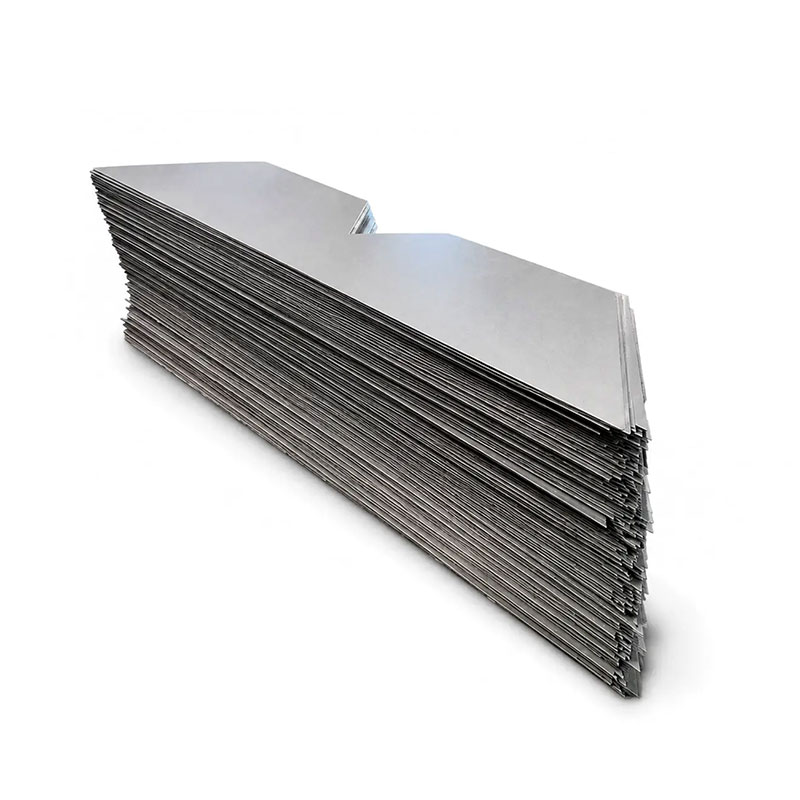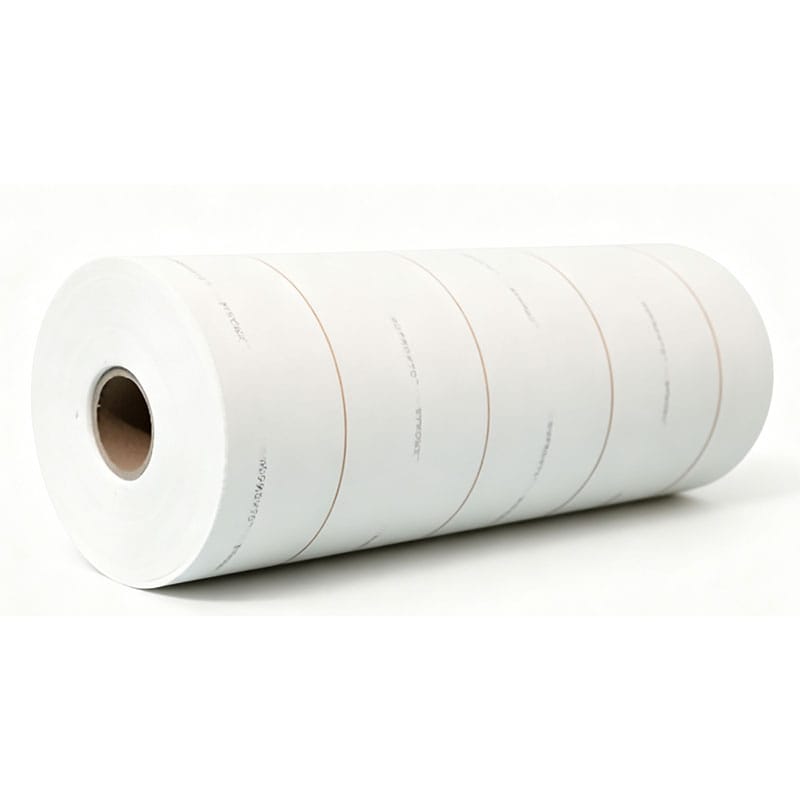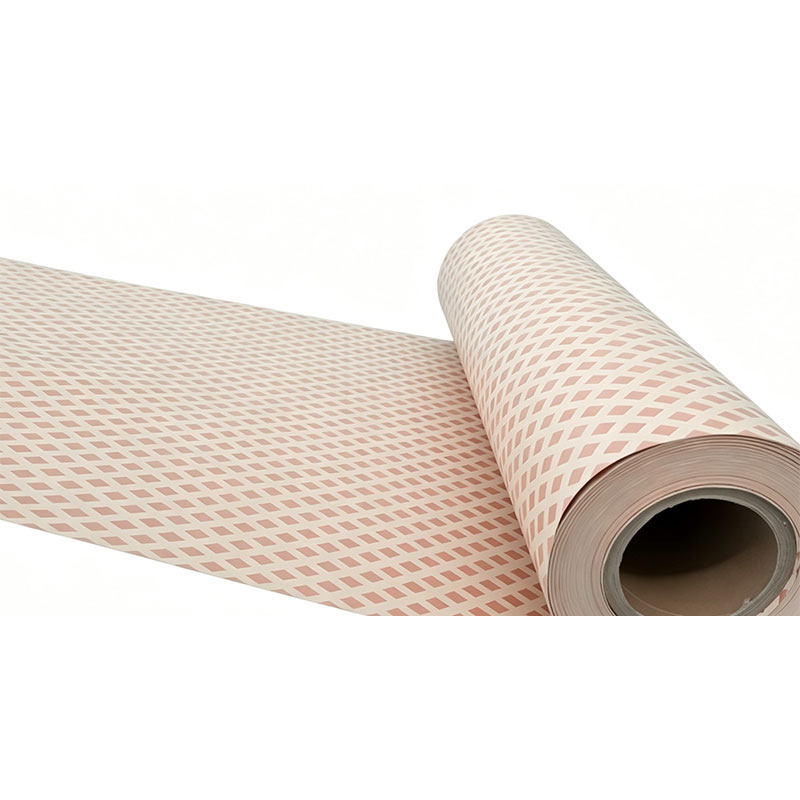
Diamond dotted paper is used in oil-immersed transformer windings when the insulation material needs to do two jobs at the same time: provide electrical separation between turns or layers and create controlled bonding after the winding is dried and heated. The material is based on electrical-grade insulation paper with heat-reactive resin applied in a dotted diamond pattern rather than as a continuous coating.
That patterned coating is the key difference between ordinary insulation paper and diamond dotted paper. The resin dots can form bonding points after curing, while the uncoated spaces help preserve paths for air and moisture evacuation during drying and for insulating oil penetration during impregnation. In transformer manufacturing, this combination can support both dielectric insulation and improved mechanical stability of the winding structure.
For buyers, however, selecting DDP is not as simple as choosing a paper thickness. Base-paper grade, nominal thickness, resin-dot condition, single- or double-sided coating, roll width, storage history, curing process, bonding requirement, and inspection documents all need to be matched to the transformer winding design. This guide explains how to evaluate diamond dotted paper before ordering and how to avoid the most common specification mistakes.
What Is Diamond Dotted Paper?
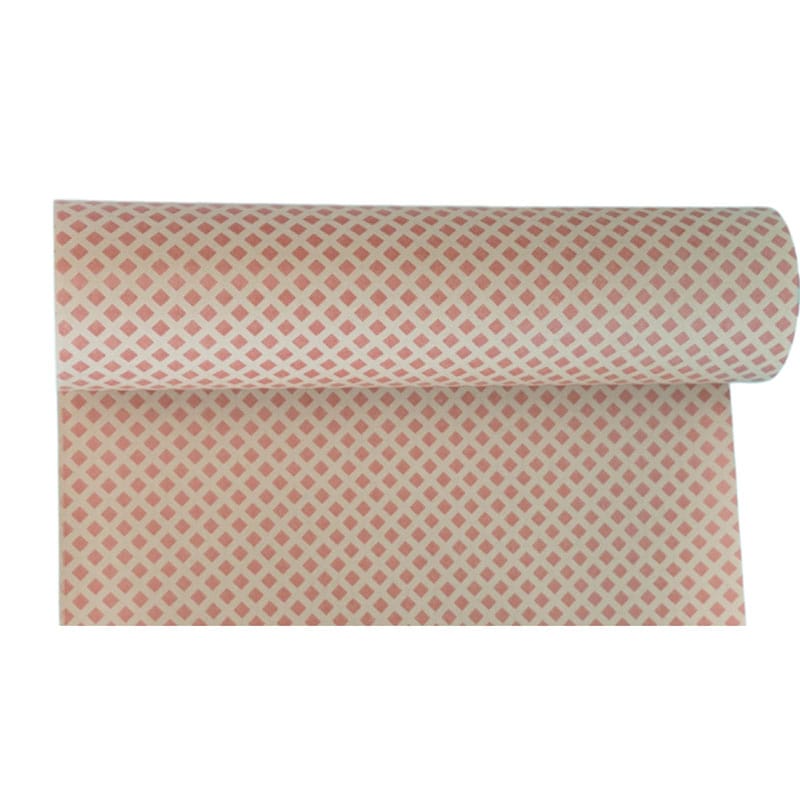
Diamond dotted paper, often abbreviated as DDP, is an electrical insulation paper coated with a heat-activated resin in a repeating diamond-dot pattern. Prennox’s current DDP (Giấy chấm kim cương) page describes the product as electrical-grade cable paper coated with a specially modified epoxy resin in a diamond-dot pattern.
The product is primarily used for turn-to-turn and interlayer insulation in oil-immersed transformer windings. Before heat activation, the material remains suitable for winding and handling. During the transformer drying and heating process, the resin coating develops bonding between adjacent insulation layers or between insulation and conductor surfaces.
This means diamond dotted paper belongs to a different functional category from plain electrical insulation paper. It is not only a separator. It is also a process-dependent bonding material.
Why the Diamond Dot Pattern Matters
The resin is not applied as a full-surface continuous film. Instead, it is distributed in discrete dots arranged in a diamond pattern. This structure gives the material two important functions.
First, the resin dots create bonding points after curing. These bonding points help stabilize winding layers and reduce relative movement inside the coil structure. Second, the open paper areas between the resin dots remain available for air removal, moisture evacuation, and transformer-oil penetration.
Prennox specifically states that the diamond coating pattern preserves open areas for oil penetration. This is a central design feature of diamond dotted paper because oil-immersed transformer insulation must support both electrical insulation and the drying/impregnation process.
A fully continuous adhesive layer could behave differently because it would cover more of the paper surface. Therefore, buyers should not treat any resin-coated paper as automatically equivalent to DDP.
Diamond Dotted Paper Is Primarily for Oil-Immersed Transformer Windings
Prennox currently lists diamond dotted paper for winding layer insulation in oil-immersed transformers, distribution-transformer foil windings, and oil-filled reactors or similar winding systems. These applications all rely on liquid dielectric impregnation and a controlled winding-drying process.
This is important for procurement because DDP should not be selected simply because it has strong dielectric properties. Its real value comes from the combination of paper insulation, resin bonding, and compatibility with an oil-filled winding structure.
For dry-type transformers, different flexible insulation systems may be more appropriate depending on the winding construction. Materials such as standard DMD or DMD prepreg have different resin, curing, and application behavior. Buyers comparing dry-type materials can review the existing DMD vs DMD Prepreg cho cách điện cuộn dây biến áp guide instead of assuming that DDP performs the same role.
Base-Paper Thickness Must Match the Winding Design
The paper substrate provides the main flexible dielectric layer, so thickness is one of the first values that should be confirmed when ordering diamond dotted paper.
Prennox currently publishes technical data for substrate thicknesses of 0.08, 0.13, 0.18, 0.20, and 0.25 mm. The same product page also lists common nominal thickness options of 0.08, 0.13, 0.15, 0.18, 0.20, 0.25, 0.30, and 0.38 mm, while stating that final dimensions and performance requirements are confirmed before order.
These values should be treated as available or commonly requested ranges, not as a universal recommendation. The transformer designer should select the paper thickness according to electrical stress, conductor geometry, winding build, mechanical requirement, oil ducts, and total insulation system.
A thicker diamond dotted paper layer may increase dielectric separation, but it also increases winding build. That can affect coil radial dimensions, copper fill factor, cooling geometry, core-window fit, and final transformer dimensions.
Single-Sided and Double-Sided Coating Serve Different Bonding Needs
DDP can be produced with resin dots on one side or both sides. The correct choice depends on how the material contacts adjacent winding layers.
A single-sided coating may be appropriate when bonding is only required on one interface. A double-sided diamond dotted paper construction can create bonding points on both sides of the insulation layer, which may be useful where both adjacent surfaces are intended to be fixed after curing.
The buyer should not assume that double-sided coating is automatically better. Additional resin changes the material structure and can affect bonding behavior, processing, thickness, and oil impregnation. The winding design should specify which surface or surfaces need bonding.
The RFQ should therefore state single-sided or double-sided coating explicitly. If the customer has not yet determined the coating arrangement, the conductor type and winding structure should be provided for technical review.
Curing Conditions Must Come From the Approved Material Specification
The resin in diamond dotted paper is heat activated. During transformer drying and curing, the resin softens, develops contact with the adjacent surface, and then cures to form a more permanent bond.
The exact curing cycle is critical because bonding performance depends on resin chemistry, paper thickness, conductor surface, winding pressure, coil thermal mass, heating rate, drying process, and time at temperature.
Different suppliers publish different curing schedules for their DDP products. That is why buyers should not copy a temperature/time combination from a generic article or another manufacturer’s data sheet and assume it applies to every diamond dotted paper grade.
The approved product data sheet should define the curing conditions for the specific material supplied. The transformer manufacturer should then validate that process in its own drying or curing equipment.
Oven Temperature Is Not Always the Same as Actual Winding Temperature
Large coils heat more slowly than the surrounding oven air. For this reason, a curing procedure should consider how the actual winding temperature is verified, especially when the resin needs to remain within a defined cure window.
When diamond dotted paper is used as a bonding material, curing should be treated as a controlled production process rather than an approximate heating step.
Storage and Shelf Life Are Part of Material Quality
Because DDP contains a heat-reactive resin system, storage conditions matter more than they do for ordinary uncoated electrical paper. Heat exposure, moisture, long storage periods, damaged packaging, or direct sunlight may affect the material before it reaches the winding line.
The buyer should therefore request the storage conditions and shelf life that apply to the specific diamond dotted paper product. Those values should come from the supplier’s approved product specification because resin systems and manufacturing processes differ.
Receiving inspection should record batch number, manufacture date where provided, packaging condition, and remaining shelf life. If material has exceeded the stated shelf-life period, the transformer manufacturer should use an agreed requalification procedure rather than approving it only by visual appearance.
Oil Penetration and Drying Paths Are Part of the Design
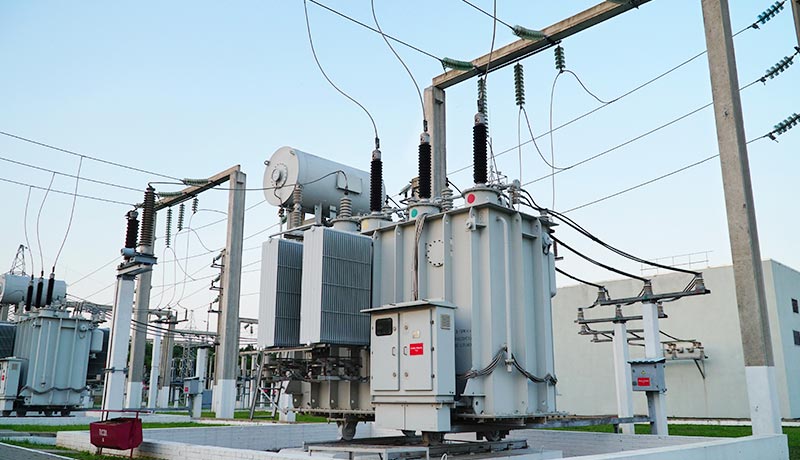
One of the defining advantages of diamond dotted paper is that the resin is applied only to part of the paper surface. The uncoated regions allow pathways through which air and moisture can escape during vacuum drying and oil can later penetrate the winding insulation system.
This does not mean that the dot pattern alone guarantees complete impregnation. Oil flow still depends on winding geometry, ducts, clamping pressure, paper condition, drying quality, oil viscosity, vacuum process, and the complete transformer construction.
The dotted coating should therefore be understood as one part of the impregnation strategy. The transformer designer still needs to verify the oil-paper insulation system as a whole.
IEC 60641-1 provides definitions and general requirements for pressboard and presspaper used for electrical purposes, while IEC 60641-2 specifies test methods for pressboard and presspaper. These standards support base-paper evaluation, but a finished resin-dotted material also needs product-specific resin and bonding requirements.
Electrical Properties Should Be Reviewed by Thickness and Test Condition
Hiện tại của Prennox diamond dotted paper page provides breakdown-voltage values for several substrate thicknesses, both in air and in oil. For example, the published values increase with substrate thickness across the listed product range.
These values are useful for product comparison, but they should not be treated as the complete transformer insulation design. Dielectric performance depends on test method, sample conditioning, paper thickness, oil condition, electrode arrangement, resin state, and the final insulation structure.
The buyer should confirm whether a reported breakdown-voltage value applies to the base paper, the coated paper before curing, or the fully cured condition. The same distinction should be made when comparing two diamond dotted paper suppliers.
| Specification area | What to define | Tại sao nó quan trọng |
|---|---|---|
| Base paper | Electrical-grade paper type and approved quality basis | Provides the primary flexible dielectric substrate. |
| Độ dày danh nghĩa | Paper or finished material thickness as specified | Affects insulation spacing and winding dimensions. |
| Resin coating | Single- or double-sided diamond-dot coating | Defines the bonding interfaces. |
| Cure requirement | Supplier-approved temperature/time/process window | Controls final bonding performance. |
| Electrical properties | Breakdown-voltage requirement and test condition | Provides measurable dielectric acceptance. |
| Mechanical properties | Tensile strength, elongation or other required values | Supports winding and handling reliability. |
| Lưu tr | Shelf life and storage conditions | Protects resin reactivity before use. |
Tensile Strength and Elongation Matter During Winding
DDP must survive slitting, roll handling, winding tension, conductor contact, and coil processing without tearing or excessive distortion. Prennox publishes machine-direction and cross-direction tensile strength values for the listed substrate thicknesses, as well as elongation requirements.
These properties are especially important when diamond dotted paper is slit into narrower widths for a specific winding machine. A material that meets dielectric requirements but tears during winding is not suitable for production.
Incoming inspection should therefore review both the electrical and mechanical values required by the purchase specification. If the transformer manufacturer uses high winding tension or a narrow slit width, process trials may also be useful before large-volume approval.
Bond Strength Should Be Defined by the Transformer Process
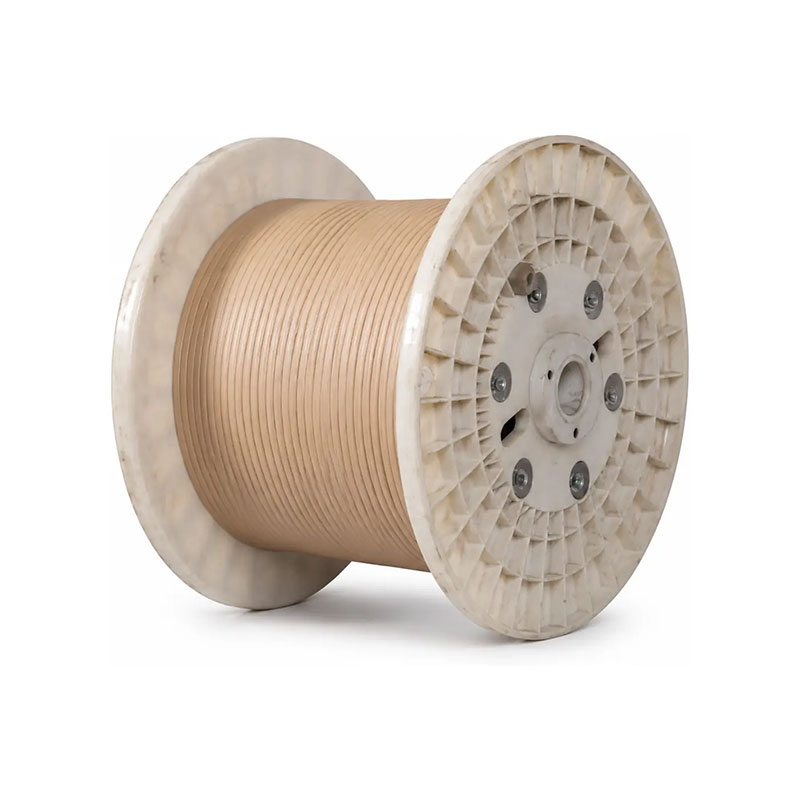
The purpose of the resin dots is to improve bonding between winding layers after curing. However, a useful bond-strength requirement must specify the test method, substrate, curing condition, pressure or loading condition, and acceptance limit.
It is not enough to say that diamond dotted paper should provide “strong adhesion.” Different test methods can produce different numerical results, and the same DDP can behave differently on copper foil, paper-covered conductor, aluminium foil, or another insulation surface.
For new transformer designs, a process validation trial can be more useful than relying only on a supplier certificate. The factory can evaluate cure behavior, bond uniformity, winding dimensions, oil impregnation, and coil handling under the actual production process.
Incoming Inspection Should Include Resin and Paper Condition
DDP receiving inspection should go beyond width and thickness. The resin-dot surface should be visually uniform, free from abnormal blocking, excessive resin migration, contamination, wrinkles, delamination, or mechanical damage.
The base paper should also be inspected for moisture damage, edge defects, tears, and packaging deterioration. If the diamond dotted paper is supplied in slit rolls, the slit edges and roll winding quality should be checked before release to production.
| Kiểm tra đến | What to inspect | Typical risk if missed |
|---|---|---|
| Batch identity | Batch/roll number and certificate match | Loss of traceability to resin and paper test data. |
| Độ dày | Nominal thickness and tolerance | Incorrect winding build or insulation spacing. |
| Width | Roll or slit width and tolerance | Poor fit on winding equipment. |
| Resin pattern | Uniform dot distribution and surface condition | Uneven bonding or processing instability. |
| Paper condition | Wrinkles, tears, moisture, contamination | Reduced dielectric or mechanical reliability. |
| Shelf life | Manufacture date and storage history where required | Changed resin cure behavior. |
| Test report | Electrical, mechanical and agreed bonding data | Material cannot be verified against the RFQ. |
Diamond Dotted Paper Should Not Be Confused With Plain Presspaper
Electrical presspaper and transformer insulation paper can provide dielectric separation, mechanical spacing, and oil compatibility. Diamond dotted paper adds a controlled bonding function through the resin-dot coating.
IEC 60641-3-2 specifies requirements for several presspaper types made from sulphate wood pulp, cotton, or mixtures of these fibers. Those base-paper standards are useful when evaluating the paper substrate. However, they do not by themselves define the complete resin-dot system, cure behavior, or winding-bond performance of a DDP product.
The RFQ should therefore identify DDP explicitly rather than asking only for “transformer insulation paper” if bonding is part of the design.
Common Diamond Dotted Paper Selection Mistakes
Choosing Thickness Without Checking Winding Build
A thicker material changes radial or axial winding dimensions. The selection should be coordinated with the complete coil and core-window design.
Using a Generic Cure Cycle
Different resin systems can require different processing. The cure cycle for diamond dotted paper should come from the approved material data and the transformer factory’s validated process.
Ignoring Shelf Life
DDP contains reactive resin. Storage history and remaining shelf life can affect processing and final bonding.
Assuming More Resin Always Means Better Bonding
Excess resin can change impregnation paths, thickness, flow, and winding geometry. Resin quantity and dot pattern should match the approved product design.
Checking Only Dielectric Strength
DDP also needs suitable mechanical strength, cure behavior, bonding performance, dimensional consistency, storage stability, and oil-impregnation compatibility.
What to Include in a Diamond Dotted Paper RFQ
Một hữu ích diamond dotted paper RFQ should describe both the insulation requirement and the winding process.
Application: identify oil-immersed transformer layer insulation, foil winding, turn insulation, reactor winding, or another approved use.
Base-paper requirement: state the approved electrical paper grade or performance requirement.
Thickness and width: define nominal thickness, width, slit width, roll length, and tolerances.
Coating arrangement: state single-sided or double-sided diamond-dot resin coating.
Curing requirement: identify the approved cure process or request supplier data for review before production.
Electrical and mechanical properties: define breakdown voltage, tensile strength, elongation, and any other required acceptance values.
Bonding requirement: state the required bond test and test condition if bonding strength is contractually controlled.
Storage and documents: request shelf-life information, storage conditions, batch traceability, test certificate, packaging method, quantity, and destination.
What Prennox Needs Before Reviewing a DDP Order
Hiện tại của Prennox DDP (Giấy chấm kim cương) page lists common substrate thicknesses, roll widths, tensile data, elongation values, and breakdown-voltage values. It also states that final dimensions, thermal class, performance requirements, and inspection documents are confirmed before order.
For a project-specific review, send the required thickness, roll or slit width, single- or double-sided coating requirement, transformer winding application, cure-process requirement, dielectric and mechanical acceptance values, quantity, and inspection documents.
If the buyer is still comparing multiple transformer insulation materials, the Hướng dẫn vật liệu cách điện biến áp can help clarify the roles of DDP, DMD, AMA, AHA, and related flexible materials. Project drawings and specifications can also be sent through the Trang liên h.
Kết luận
Diamond dotted paper is a specialized transformer winding material that combines electrical insulation with heat-activated bonding. Its diamond resin pattern creates discrete bonding points while preserving open paper areas for drying and oil penetration, making it especially useful in oil-immersed transformer windings and foil coils.
For procurement, the critical controls are not limited to thickness. Buyers should also confirm the base paper, coating side, resin condition, curing process, dielectric and mechanical properties, storage and shelf life, roll dimensions, batch traceability, and the specific winding process in which the material will be used.
When these items are defined before ordering, DDP can be evaluated as part of the complete oil-paper winding system rather than as a generic insulation sheet.
Câu hỏi thường gặp
What is diamond dotted paper used for in transformers?
Diamond dotted paper is mainly used for turn-to-turn or interlayer insulation in oil-immersed transformer windings, including foil windings. The resin dots bond adjacent layers after curing while the paper provides electrical insulation.
Why is the epoxy applied in a diamond pattern?
The dotted pattern creates bonding points without covering the full paper surface. The open areas help support air and moisture evacuation during drying and oil penetration during impregnation.
Does diamond dotted paper require heat curing?
Yes. The resin is heat activated and requires an approved curing process to develop the intended bonding. The exact temperature and time should come from the specific material data sheet rather than a generic value.
Can diamond dotted paper replace ordinary transformer insulation paper directly?
Not automatically. DDP adds a resin-bonding function and therefore changes curing, storage, winding behavior, and inspection requirements. The transformer design and manufacturing process should be reviewed before substitution.
What information should be included in a diamond dotted paper RFQ?
Provide application, base-paper requirement, nominal thickness, width or slit width, single- or double-sided coating, cure requirement, electrical and mechanical acceptance values, bonding requirement where applicable, storage and shelf-life requirements, quantity, packaging, and inspection documents.