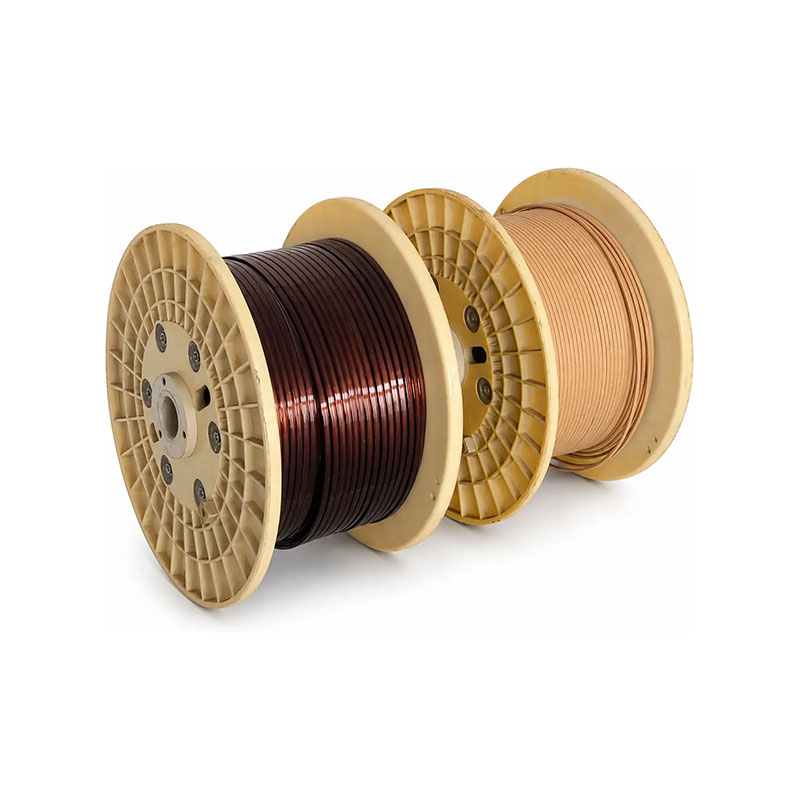
A transformer winding wire specification should define far more than copper size and insulation type. For transformer manufacturers, the specification is the document that connects electromagnetic design, winding-machine capability, insulation construction, conductor resistance, mechanical handling, reel logistics, incoming inspection, and supplier responsibility before production begins.
If the RFQ only says “rectangular copper wire, paper covered” or “enameled copper winding wire,” important details remain open: Is the stated width and thickness bare copper or finished insulated size? How much insulation build is allowed? What resistance or conductivity requirement applies? Which dimensional tolerance governs the conductor? How many paper layers are required? What overlap is used? Which reel size fits the winding machine? What documents are required with each batch?
This guide explains how to build a practical transformer winding wire specification for copper winding conductors. It covers round and rectangular wire, enamel and paper insulation, bare versus finished dimensions, electrical resistance, dimensional tolerances, thermal class, paper covering, reel configuration, inspection, packaging, and RFQ data. The objective is to give buyers a complete technical basis for ordering rather than relying on a generic material description.
Why a Transformer Winding Wire Specification Must Separate Conductor and Insulation
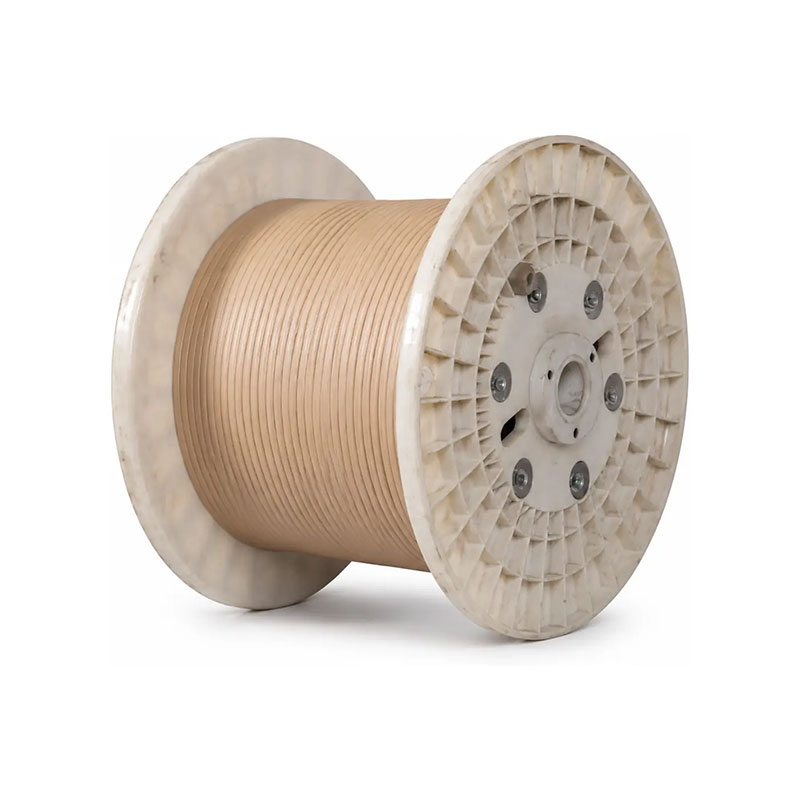
The conductor carries current; the insulation separates turns, layers, or adjacent conductors. These two functions are physically combined in the finished winding wire but should remain separate in the purchasing specification.
Prennox’s current Copper Winding Wire for Transformers page lists enameled and paper-covered copper conductors and states that conductor dimensions, insulation requirements, tolerances, and order quantities are reviewed before production.
A complete transformer winding wire specification should therefore identify the bare copper geometry first and the insulation construction second. This prevents a common mistake: using the overall insulated dimension as if it were the metallic copper size.
Choose Round or Rectangular Copper From the Winding Design
Round and rectangular conductors serve different winding geometries. Round wire is common in smaller conductors and winding arrangements where circular geometry fits the design. Rectangular wire is often used where higher conductor area, better space utilization, or a specific coil geometry is required.
The correct transformer winding wire specification should state the conductor shape explicitly, and every transformer winding wire specification should keep the bare conductor size separate from insulation build. For round wire, specify bare conductor diameter. For rectangular wire, specify bare width and thickness and make sure the drawing identifies which dimension is width and which is thickness.
Rectangular wire also needs a controlled width-to-thickness relationship, dimensional tolerances, and corner geometry according to the applicable winding-wire standard or approved supplier specification.
IEC 60317 Uses Different Standards for Different Winding-Wire Constructions
Winding wire is not covered by one universal product standard. The applicable IEC 60317 part depends on conductor shape, insulation type, and thermal class.
IEC 60317-27-1:2020+AMD1:2024 covers paper tape-covered round copper winding wire. It specifies two or more paper-tape layers and identifies the product primarily for oil-immersed transformer coils. The standard covers nominal conductor diameters from 0.500 mm through 5.000 mm.
IEC 60317-27-3:2019+AMD1:2024 covers paper tape-covered rectangular copper winding wire, with nominal conductor widths from 2.0 to 31.5 mm and thicknesses from 0.80 to 10.0 mm.
For enamelled rectangular copper wire, the applicable specification depends on enamel chemistry and thermal class. One example is IEC 60317-17:2020, which covers a particular class of enamelled rectangular copper winding wire.
A buyer should therefore never write “according to IEC 60317” without identifying the specific product construction. The transformer winding wire specification should reference the part that actually matches the ordered wire.
Bare Copper Dimensions Must Be Written Separately From Finished Dimensions
The metallic conductor dimensions determine copper cross-sectional area, conductor resistance, current density, and part of the winding geometry. Insulation adds outside dimensions but does not increase conductive copper area.
A good transformer winding wire specification therefore uses two sets of dimensions where needed:
Bare conductor dimensions: round diameter or rectangular width × thickness, with tolerance.
Finished insulated dimensions: the overall wire size after enamel or paper covering, including the permitted insulation build.
This distinction is especially important for rectangular paper-covered conductors. IEC 60317-27-3 explicitly treats nominal conductor dimensions and the increase in dimensions due to paper as separate ordering information.
| Specification field | What it should describe | Why it matters |
|---|---|---|
| Bare conductor size | Metallic diameter or width × thickness | Controls copper area and resistance |
| Insulation build | Increase due to enamel or paper system | Controls electrical separation and finished dimensions |
| Finished wire size | Overall insulated dimensions | Controls winding fit and layer build |
| Dimensional tolerance | Permitted deviation from nominal values | Controls repeatability and winding geometry |
| Corner condition | Applicable radius or standard requirement | Affects insulation application and winding handling |
Copper Cross-Section and Resistance Must Match the Electrical Design
The bare conductor cross-section is directly related to resistance. If the actual copper area is smaller than intended, conductor resistance rises. That affects winding I²R loss, heat generation, and the complete transformer loss calculation.
The earlier Copper Winding Wire Resistance Checks Before Ordering guide explains how conductor length, cross-sectional area, measurement temperature, and test method affect resistance results.
In a transformer winding wire specification, the buyer should define either the applicable resistance requirement, conductivity requirement, or another approved electrical acceptance basis. The reference temperature and test method should be stated so supplier and customer data remain comparable.
Do not accept a generic “high conductivity copper” statement as a substitute for a measurable electrical requirement when winding-loss performance matters.
Paper-Covered Winding Wire Needs More Than a Paper Thickness
Paper-covered copper wire is used extensively in oil-immersed transformer windings. The paper becomes part of the oil-paper insulation system and therefore must be specified in terms of construction, not only thickness.
IEC 60317-27-1 and IEC 60317-27-3 require paper-covered conductors to use multiple paper-tape layers. For paper-covered round wire, the current standard states that the number of paper tapes, paper type, paper thickness, and degree of overlap are agreed between purchaser and supplier.
A practical transformer winding wire specification for paper-covered conductor should therefore define:
the paper type, number of layers, tape thickness, overlap, winding direction where relevant, total increase in dimensions due to paper, finished dimensional tolerance, and any oil-compatibility or test requirement.
If these details are left open, two wires with the same bare copper dimensions can arrive with very different finished sizes and winding behavior.
Paper Overlap Changes the Final Insulation Build
Paper tape is wrapped around the conductor with a defined overlap. The overlap helps avoid direct gaps between adjacent turns of tape, but it also affects the local thickness of the insulation system.
For a transformer winding wire specification, the degree of overlap should be agreed before production because it influences the finished diameter or rectangular dimensions and can affect winding consistency.
Too little overlap can create weak coverage zones. Excessive overlap can increase total build and produce uneven thickness. The appropriate value belongs to the approved winding-wire specification, not a universal online rule.
Enameled Copper Wire Needs a Defined Enamel System and Grade
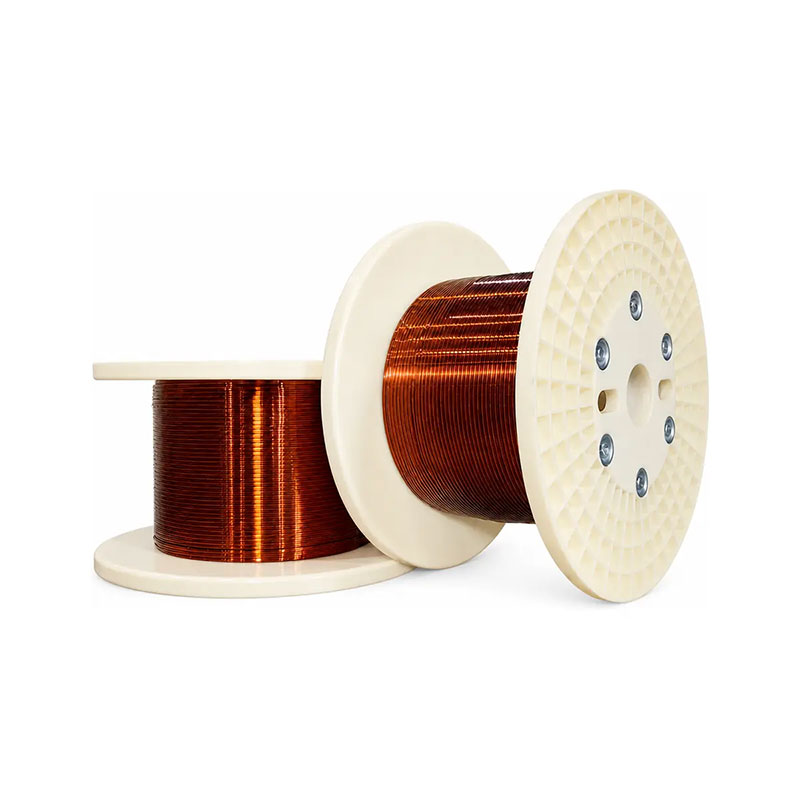
“Enameled copper wire” is not one fixed material. Different enamel chemistries and thermal classes are available, and the applicable IEC 60317 part changes with the insulation system.
A complete transformer winding wire specification for enameled wire should identify the insulation type or applicable standard, thermal class, enamel grade/build, conductor dimensions, finished dimensions, adhesion/flexibility requirements where applicable, breakdown-voltage requirement, and any special processing need.
Prennox’s product page states that enamelled conductor dimensions and insulation requirements are supplied according to confirmed specifications. Buyers should therefore provide the intended electrical and thermal requirements rather than asking only for “enameled copper wire for transformer.”
Thermal Class Must Match the Complete Transformer Insulation System
The winding-wire thermal class is one component of the transformer insulation system. It should be compatible with conductor insulation, layer insulation, spacers, resins, paper, varnish, operating temperature, and cooling method.
A higher-temperature wire is not automatically a better choice if the rest of the insulation system is designed for a different class. Similarly, a paper-covered conductor used in an oil-immersed transformer should be reviewed with the oil-paper insulation design rather than by the conductor covering alone.
For this reason, the transformer winding wire specification should state the required insulation or thermal class independently from conductor size.
Dimensional Tolerance Can Accumulate Across a Winding
One conductor that is slightly above nominal insulated thickness may appear acceptable. A complete coil containing many turns and layers can accumulate that variation into a significant radial or axial build difference.
This is why a transformer winding wire specification should define both bare conductor tolerance and finished insulated tolerance. The winding designer should also account for realistic manufacturing variation when checking coil fit inside the core window.
For rectangular conductors, variation in both width and thickness matters. Thickness often has the stronger effect on radial build depending on winding orientation, while width can affect axial build and turn alignment.
Mechanical Properties Matter During Winding
Transformer winding wire must survive straightening, feeding, bending, tension, winding, transposition where applicable, lead forming, and coil compression without conductor cracking or insulation damage.
Mechanical requirements may include elongation, flexibility, adherence, bend performance, insulation continuity, and dimensional stability depending on the wire type and applicable standard.
A transformer winding wire specification should therefore identify the mechanical properties that are actually important for the factory process. Do not assume that electrical resistance and insulation breakdown are enough to qualify a winding wire.
Reel and Spool Requirements Should Match the Winding Machine
Winding wire is delivered on reels or spools, and the package can affect production almost as much as the conductor itself.
The RFQ should state reel flange diameter, barrel diameter, traverse width, bore size, maximum gross or net weight, winding direction, payout direction, and any lifting or handling limitations where these are controlled by the transformer factory.
A well-written transformer winding wire specification prevents a situation where the wire is electrically correct but cannot be mounted on the winding machine.
For heavy rectangular conductors, reel strength and handling also matter. The package should support transport without allowing conductor deformation, loose winding, telescoping, or edge damage.
Continuous Length Requirements Should Be Defined Before Production
Transformer windings may require long continuous conductor lengths to avoid unnecessary joints. The required continuous length depends on coil design, conductor size, reel capacity, manufacturing process, and supplier capability.
A transformer winding wire specification should therefore state whether joints are prohibited within a reel, whether multiple lengths are acceptable, the minimum continuous length if controlled, and how any permitted joints must be identified.
Do not assume that every reel automatically contains one uninterrupted length. If continuous length is critical to winding production, it belongs in the purchase specification.
Surface Condition and Cleanliness Need Inspection
The conductor and insulation surface should arrive clean enough for winding and subsequent insulation processing. Oil, metallic particles, paper debris, damaged enamel, torn paper, moisture, and handling damage can create production or dielectric problems.
For paper-covered wire, incoming inspection should check coverage, overlap, tears, loose tape, contamination, and overall dimensions. For enameled wire, inspect coating continuity, scratches, peeling, surface damage, and dimensional consistency according to the approved specification.
A transformer winding wire specification can define visual acceptance requirements and packaging protection without relying only on supplier internal standards.
| Incoming check | What to verify | Typical problem prevented |
|---|---|---|
| Conductor identity | Copper type, round/rectangular shape, batch | Wrong material released to winding |
| Bare dimensions | Diameter or width × thickness | Resistance and coil geometry mismatch |
| Finished dimensions | Overall insulated size | Unexpected winding build |
| Resistance | Specified reference condition and method | Higher-than-designed winding loss |
| Insulation construction | Enamel build or paper layers/overlap | Incorrect dielectric system |
| Surface condition | Damage, contamination, tears, scratches | Winding and insulation defects |
| Reel configuration | Size, weight, labels and winding direction | Machine loading and payout problems |
| Traceability | Batch, reel and certificate match | Loss of quality records |
Test Reports Should Match the Exact Reel or Batch
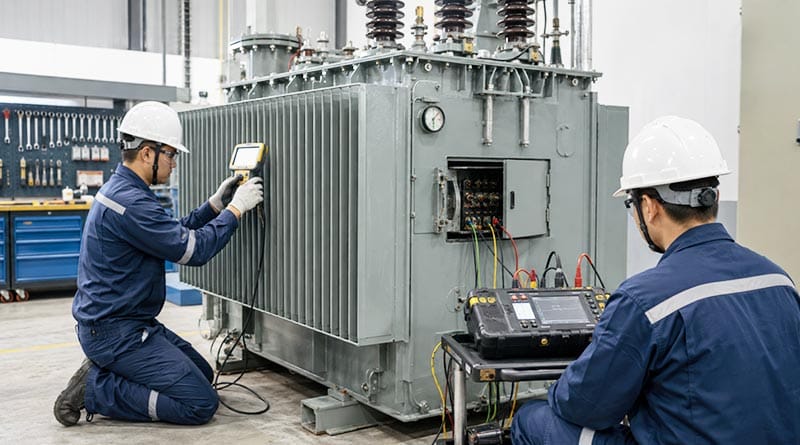
A supplier certificate is useful only when it can be linked to the delivered winding wire. Reel identification, batch number, conductor dimensions, insulation construction, resistance results, and applicable tests should match the physical shipment.
The transformer winding wire specification should state which documents are required: certificate of conformity, dimensional report, resistance or conductivity report, insulation test report, mechanical-test data, paper-covering details, or other agreed records.
If one batch contains multiple reels, the buyer should also define the sampling basis through its quality procedure or purchase specification rather than assuming one test result represents every reel under all conditions.
Common Transformer Winding Wire Specification Mistakes
Writing Only the Finished Wire Size
Finished dimensions include insulation. Without the bare copper dimensions, the buyer cannot confirm metallic cross-section or resistance basis.
Writing “Paper Covered” Without Defining the Paper Build
Number of paper layers, paper thickness, overlap, and total dimensional increase should be agreed for a complete transformer winding wire specification.
Using One IEC 60317 Reference for Every Wire Type
Different winding-wire constructions use different IEC 60317 parts. The reference should match conductor shape, insulation system, and thermal class.
Ignoring Reel Size Until Delivery
An oversized or incompatible reel can stop production even when the conductor itself is correct.
Accepting “High Conductivity Copper” Without a Measurable Requirement
Where electrical performance matters, define resistance or conductivity under stated test conditions.
What to Include in a Transformer Winding Wire RFQ
A practical transformer winding wire specification should include enough information for quotation, production, and receiving inspection.
Conductor: copper conductor, round or rectangular, bare dimensions, dimensional tolerances, and required electrical properties.
Insulation: enameled or paper-covered construction, applicable standard, thermal class, enamel grade/build or paper type/layers/overlap, and finished dimensional increase.
Finished dimensions: overall diameter or width/thickness after insulation, including tolerance.
Electrical tests: resistance or conductivity requirement, reference temperature, dielectric test, and any other specified electrical property.
Mechanical tests: elongation, flexibility, adhesion, bend performance, or other relevant acceptance criteria.
Reel and continuous length: spool dimensions, net weight, payout direction, minimum continuous length, and any joint restrictions.
Documentation: batch traceability, certificates, dimensional and test reports, packaging, quantity, and destination.
What Prennox Needs Before Reviewing a Winding Wire Order
Prennox’s current Copper Winding Wire for Transformers page asks buyers to confirm conductor dimensions, insulation requirements, tolerances, order quantities, and other project-specific details before production.
For a paper-covered conductor, the inquiry should clearly state bare copper dimensions, round or rectangular shape, paper type, number of layers, paper build or dimensional increase, overlap requirement, finished dimensions, reel configuration, quantity, and inspection documents.
For enameled copper wire, provide bare conductor dimensions, enamel system or applicable standard, thermal class, enamel grade/build, finished dimensions, resistance requirement, reel details, quantity, and required test documents.
If resistance is a key acceptance point, review the Copper Winding Wire Resistance Checks Before Ordering guide. For insulation-paper design context, the Transformer Insulation Paper Thickness article can help clarify dimensional build. Project specifications can also be sent through the Contact page.
Conclusion
A complete transformer winding wire specification should define the copper conductor, insulation construction, finished dimensions, electrical performance, mechanical requirements, reel configuration, continuous length, packaging, inspection, and traceability before the order is released.
The most important rule is to separate bare conductor dimensions from insulation build. That single distinction affects copper cross-section, resistance, winding loss, finished coil dimensions, and whether the material fits the approved transformer design.
When buyers also define the correct IEC 60317 product standard, paper or enamel construction, dimensional tolerances, resistance basis, reel requirements, and inspection documents, the transformer winding wire specification becomes easier to compare across suppliers and winding production becomes much more predictable.
FAQ
What should a transformer winding wire specification include?
A transformer winding wire specification should include conductor material and shape, bare dimensions and tolerances, insulation type, insulation build, finished dimensions, resistance or conductivity requirements, thermal class, mechanical requirements, reel configuration, continuous length, packaging, and inspection documents.
Should winding wire dimensions refer to bare copper or insulated wire?
Both should be stated where relevant. Bare copper dimensions determine metallic cross-section and resistance, while finished insulated dimensions control winding fit and total coil build.
What should be specified for paper-covered copper winding wire?
Specify conductor shape and bare size, paper type, number of paper layers, paper thickness, overlap, total dimensional increase, finished dimensions, electrical requirements, reel details, and applicable IEC 60317 part.
Can one IEC 60317 standard be used for every transformer winding wire?
No. Different IEC 60317 parts apply to different conductor shapes, insulation systems, and thermal classes. The transformer winding wire specification should reference the standard that matches the actual product.
Why should reel size be included in a winding wire RFQ?
The reel must fit the winding machine, lifting equipment, payout system, and handling limits. An electrically correct wire can still disrupt production if the reel dimensions or weight are incompatible with the factory process.