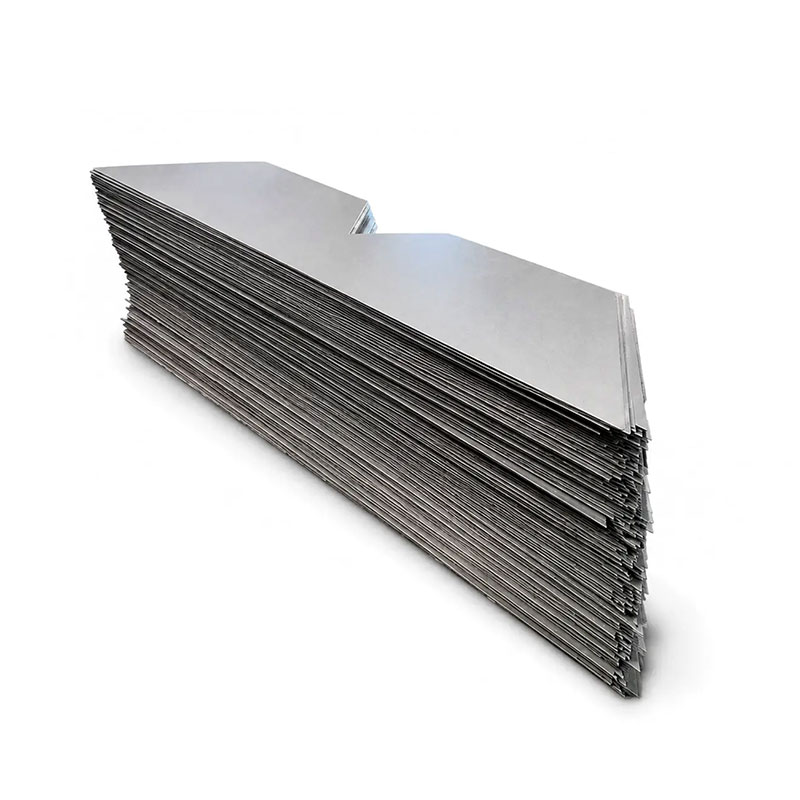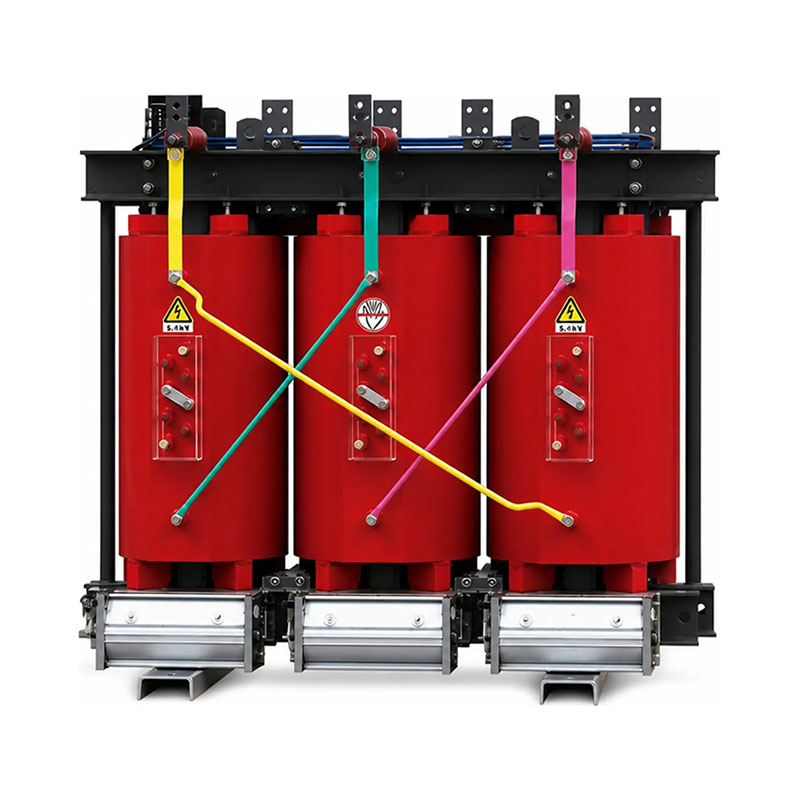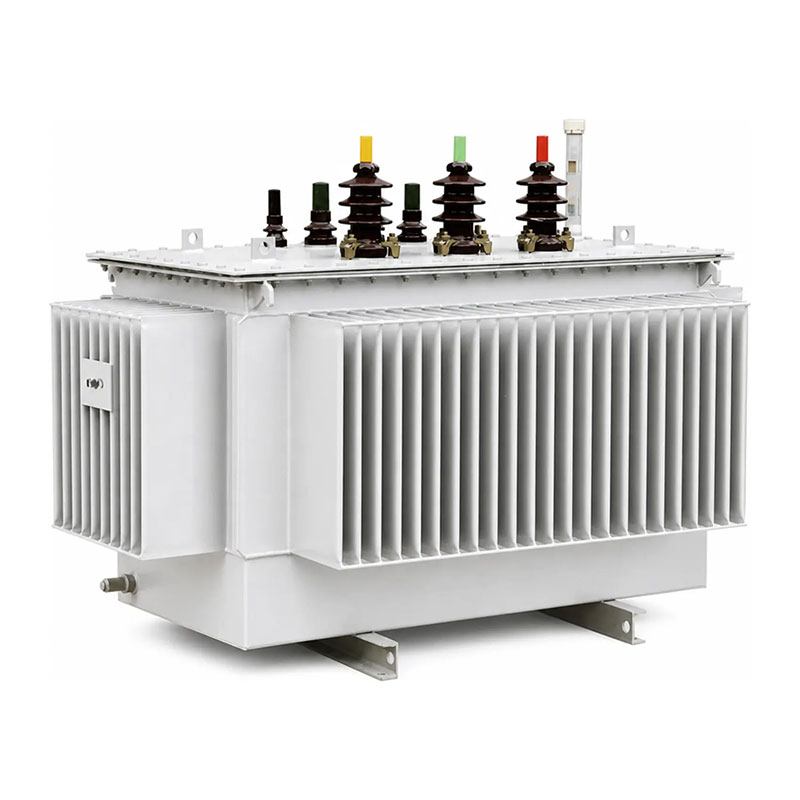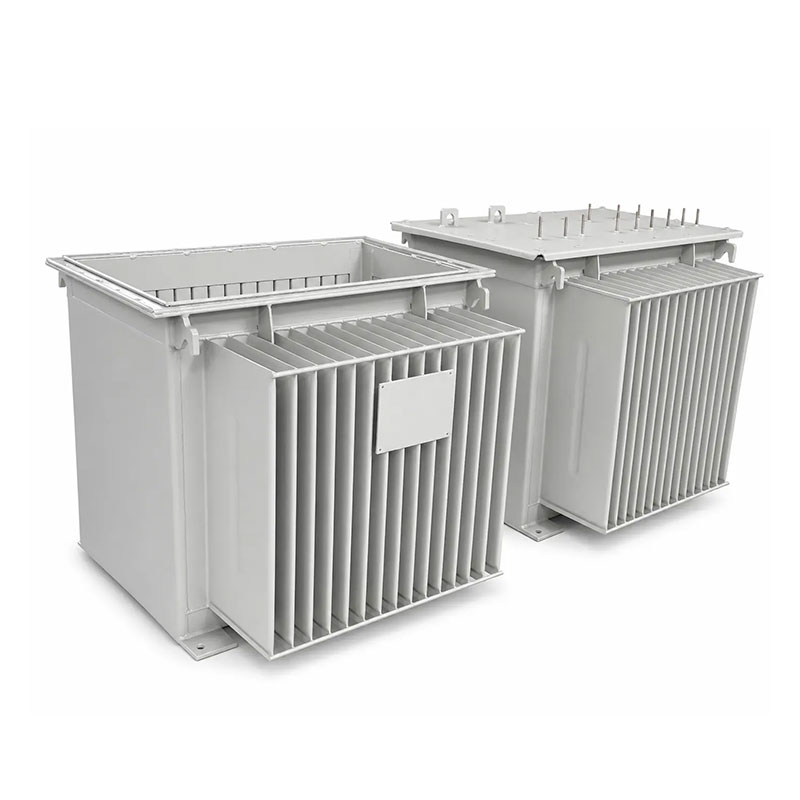
Choosing between a corrugated tank and an external radiator is not simply a matter of selecting the design with the larger cooling surface. For transformer manufacturers and project engineers, the more useful question is how each cooling arrangement fits the transformer’s total losses, oil circulation path, temperature-rise target, installation envelope, transport plan, maintenance strategy, and fabrication constraints. That is why a practical corrugated transformer tank vs radiator cooling comparison must start with the complete thermal and mechanical design rather than with a single tank dimension.
In a corrugated tank, the formed tank wall provides both containment and additional heat-transfer area. In a radiator-based arrangement, the tank is connected to one or more dedicated radiator banks that increase the external heat-dissipation area and may support natural or forced-air cooling. Both approaches are used on liquid-immersed transformers, but they create different requirements for drawings, interfaces, testing, installation, maintenance, and procurement.
Hướng dẫn này giải thích cách đánh giá corrugated transformer tank vs radiator cooling without assuming that one design is universally superior. It focuses on the information a transformer manufacturer, engineering team, or procurement department should confirm before freezing the tank and cooling configuration.
Why Corrugated Transformer Tank vs Radiator Cooling Is a System-Level Decision
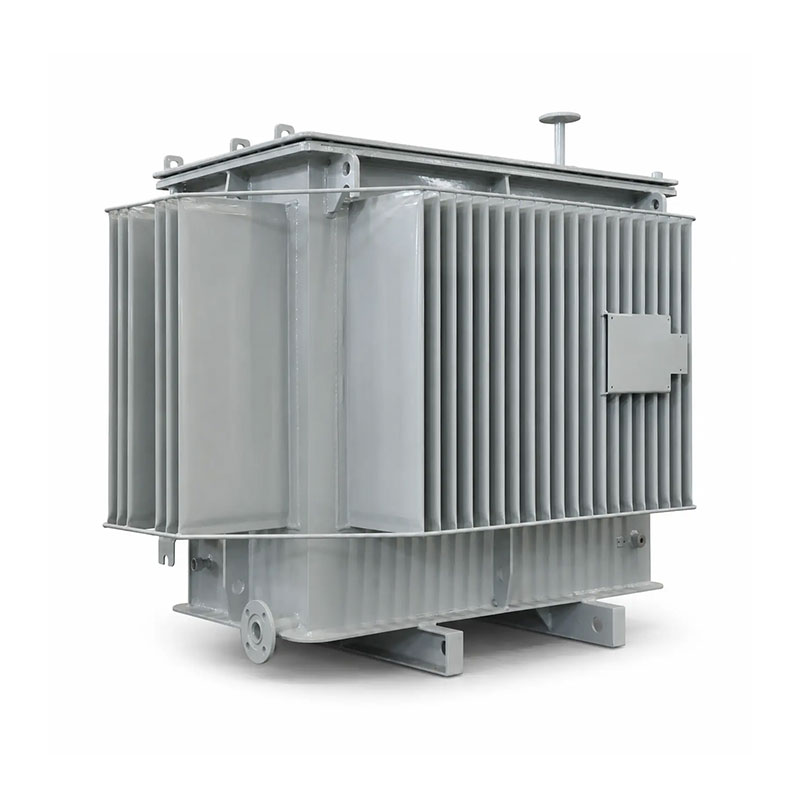
A transformer cooling structure has one basic job: transfer the heat generated by core and winding losses to the surrounding environment while keeping temperatures within the project’s specified limits. The path is typically active part to insulating liquid, insulating liquid to tank or radiator surfaces, and finally those surfaces to ambient air.
The cooling surface therefore cannot be selected independently from the transformer’s losses and operating conditions. The International Electrotechnical Commission’s IEC 60076-2 addresses temperature rise for liquid-immersed transformers and identifies transformers according to cooling method. It also covers temperature-rise testing. This matters because the final thermal performance is verified on the transformer as a system; it is not established only by quoting the nominal surface area of a tank or radiator.
Một hữu ích corrugated transformer tank vs radiator cooling review therefore asks five questions at the beginning: What losses must be dissipated? What ambient and installation conditions apply? What oil and air circulation mechanisms are intended? What temperature-rise requirements must be met? What mechanical and service constraints affect the tank and cooling assembly?
How Corrugated Tank Cooling Works
In practice, corrugated transformer tank vs radiator cooling should be checked against the same approved loss and temperature-rise basis.
A corrugated transformer tank uses formed fins or corrugations in the tank wall to enlarge the effective surface exposed to ambient air. The hot insulating liquid transfers heat to the steel wall, and the external corrugated surfaces release that heat primarily through natural convection and radiation to the surroundings.
The Prennox corrugated tank product page states that its tanks are built to approved drawings and can be configured by tank dimensions, corrugation pitch, depth, panel width, material thickness, openings, interfaces, coating system, and leak-test requirements. This is an important distinction: “corrugated” describes a structural and cooling concept, but the actual geometry remains project-specific.
Trong một corrugated transformer tank vs radiator cooling study, corrugated walls are especially attractive when the transformer design benefits from integrating enclosure and cooling functions. Fewer separate cooling assemblies can simplify the external arrangement, but the corrugations still need to satisfy thermal, pressure, dimensional, welding, coating, and transport requirements at the same time.
Corrugation Geometry Is More Than a Surface-Area Number
Fin depth, pitch, height, spacing, panel arrangement, steel thickness, surrounding clearances, and oil-side circulation all affect practical heat transfer. Increasing one dimension does not automatically create a proportional improvement in thermal performance. Deep or closely spaced fins can also change fabrication behavior, access for coating, mechanical flexibility, and space around adjacent fittings.
For that reason, a corrugated transformer tank vs radiator cooling comparison should not rely on a simple “square metres of steel” calculation unless the manufacturer’s validated thermal design method supports it.
How External Transformer Radiator Cooling Works
Các corrugated transformer tank vs radiator cooling comparison also needs the intended cooling designation and installation arrangement.
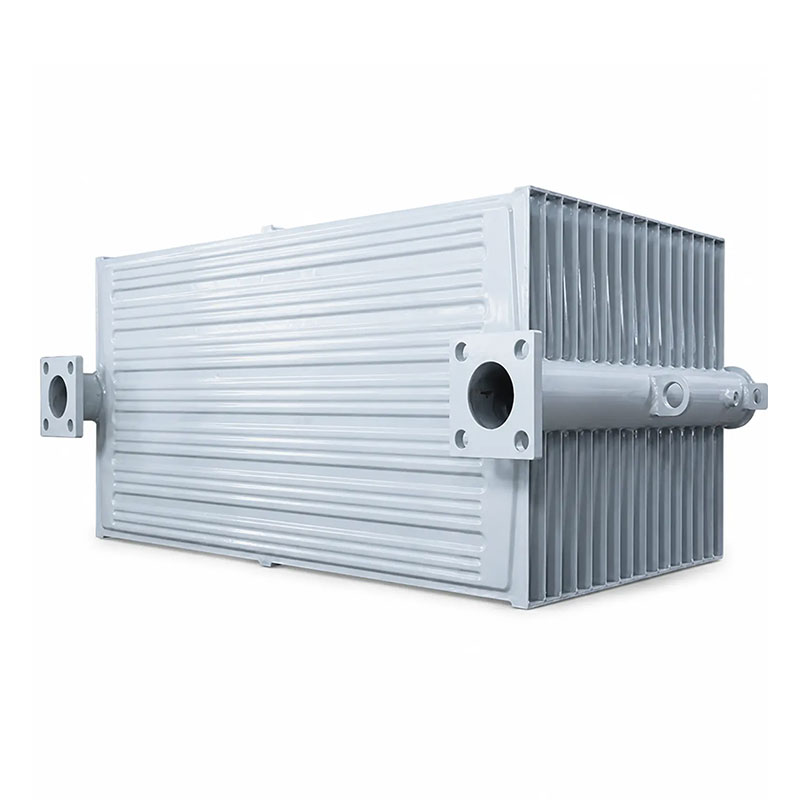
External transformer radiators create a dedicated oil-to-air heat-exchange surface connected to the tank through headers, flanges, pipes, or other approved interfaces. Hot oil enters the radiator, releases heat through the radiator panels, becomes denser as it cools, and returns toward the transformer. In natural oil circulation, this temperature and density difference supports the circulation path without an oil pump.
Detachable designs such as the PC type detachable transformer radiator use flange connections so the radiator can be removed for transport, installation, or maintenance. Fixed arrangements such as the PG type fixed transformer radiator use a different connection concept and should be evaluated against the project’s assembly and service requirements.
The IEC publishes a dedicated standard for removable transformer radiators. IEC 60076-22-2 covers radiators mounted on liquid-immersed power transformers and includes common mechanical and operating requirements as well as type and routine tests. If forced-air cooling is part of the design, IEC 60076-22-6 addresses electric fans used in transformer cooling circuits.
This shows why corrugated transformer tank vs radiator cooling is also a question of cooling architecture. A radiator bank can operate in a natural-air arrangement or become part of a forced-air system, depending on the complete transformer design. A corrugated tank is commonly associated with natural cooling, but the final cooling designation must match the actual transformer configuration rather than a generic assumption.
Corrugated Transformer Tank vs Radiator Cooling: Key Design Differences
| Design factor | Corrugated tank cooling | External radiator cooling |
|---|---|---|
| Cooling surface | Integrated into formed tank walls | Provided by separate radiator panels or banks |
| Tank integration | Cooling and enclosure functions are closely combined | Tank and radiator are separate but hydraulically connected |
| Interfaces | Fewer external radiator connections may be required | Radiator connections, headers, flanges or valves must be defined |
| Transport | Corrugations remain part of tank envelope | Detachable radiators may be removed for shipment |
| Maintenance | Cooling surface is integral with tank | Detachable radiator banks can be serviced separately |
| Forced-air expansion | Project-specific and not assumed | Radiator banks may be combined with fans when the transformer design requires it |
| Procurement inputs | Tank drawing, corrugation geometry, interfaces, material, coating and tests | Radiator type, dimensions, panel count, connections, surface finish, cooling duty and tests |
The table is not a substitute for a thermal calculation. It simply highlights that corrugated transformer tank vs radiator cooling changes both the heat-transfer arrangement and the mechanical interface strategy.
Start With Losses, Temperature Rise and Ambient Conditions
The most reliable cooling selection begins with the amount of heat that must be rejected under the specified operating condition. Transformer core loss exists whenever the transformer is energized, while winding loss varies strongly with load and also depends on design and operating conditions. Additional stray and auxiliary losses may also contribute to the thermal balance.
Those losses should be evaluated together with the required temperature-rise limits, ambient temperature assumptions, altitude where relevant, loading pattern, enclosure or room conditions, and cooling mode. IEC 60076-2 provides the international framework for temperature rise of liquid-immersed transformers, while IEC 60076-1 gives general transformer requirements including liquid preservation systems and tank pressure, vacuum, and leak-test considerations.
Cho một thực corrugated transformer tank vs radiator cooling decision, the engineering team should provide the expected total losses and the thermal design basis to the tank or radiator supplier when those values affect component design. A drawing that only states tank length, width, and height does not fully describe the cooling requirement.
Avoid Treating Rated Power as a Cooling Specification
Two transformers with the same kVA or MVA rating can have different losses, impedance, conductor designs, core designs, loading expectations, ambient conditions, or temperature-rise limits. Their required heat-dissipation arrangements may therefore differ. Rated power is useful project information, but it is not a complete radiator or corrugated-fin specification.
For procurement teams, documenting these conditions makes the corrugated transformer tank vs radiator cooling comparison traceable during drawing review and supplier approval.
When a Corrugated Tank Can Be the More Integrated Solution
For compact distribution designs, corrugated transformer tank vs radiator cooling should be resolved before the external envelope is frozen.
A corrugated configuration can be attractive where the required heat dissipation can be achieved through the tank wall while preserving the necessary mechanical margins and installation clearances. Integrating the cooling surface into the enclosure can reduce the number of separate external radiator assemblies and their associated connections.
During a corrugated transformer tank vs radiator cooling review, an integrated corrugated tank may deserve particular consideration when the transformer package favors a self-contained tank arrangement, when detachable cooling banks are not required for transport or maintenance, and when the validated thermal design shows that corrugated surface area can satisfy the specified temperature rise.
Các existing Hướng dẫn bể biến áp sóng explains the basic role of corrugated walls. For procurement, however, the next step is to confirm the actual drawing, corrugation dimensions, tank interfaces, coating, leak-test requirements, and thermal duty rather than assuming that every corrugated tank behaves the same way.
When External Radiators Provide More Design Flexibility
Where shipment or service access is critical, corrugated transformer tank vs radiator cooling should include the removable assembly strategy.
Radiator banks can provide a modular way to increase external cooling surface. Their dimensions, panel count, connection arrangement, and placement can be coordinated with the tank and transformer layout. Detachable radiators can also reduce shipping envelope or allow radiator replacement and servicing without fabricating a new main tank.
Vì lý do này, corrugated transformer tank vs radiator cooling should consider the future operating concept as well as the initial hardware. If the project anticipates multiple cooling stages or requires detachable banks because of transport restrictions, external radiators may provide useful design flexibility. If those functions are unnecessary, a radiator system may add interfaces that the project does not need.
For a deeper explanation of the oil and air heat-transfer path, the existing Nguyên lý làm việc của bộ tản nhiệt biến áp article can be used together with the final transformer thermal design.
Mechanical Behavior, Pressure and Leak Tightness Cannot Be Separated From Cooling
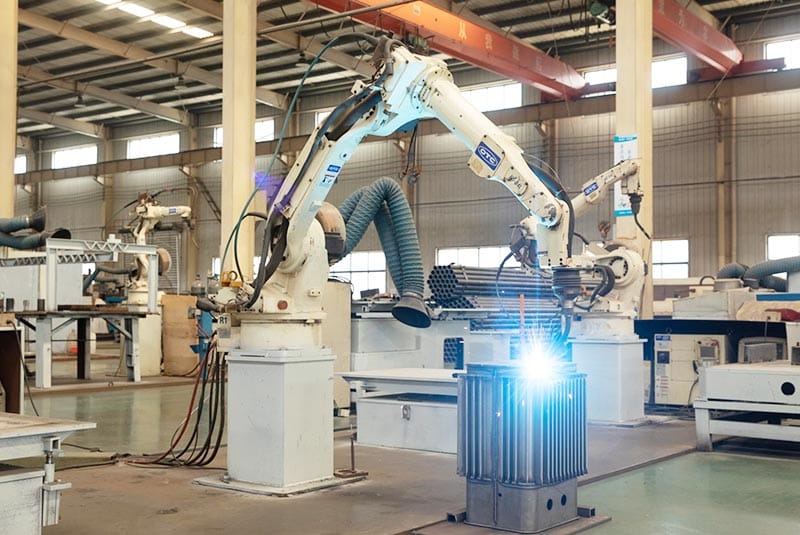
Mechanical acceptance is therefore part of the corrugated transformer tank vs radiator cooling decision, not a separate purchasing detail.
IEC 60076-1 includes general requirements associated with transformer tanks, including pressure, vacuum, and leak tests. The exact test pressure, vacuum condition, holding time, and acceptance criteria should come from the approved project specification and applicable standard rather than being copied from another transformer design.
Trong một corrugated transformer tank vs radiator cooling procurement package, the buyer should state which leak and pressure tests apply to the tank and which apply to separately supplied radiator assemblies. If detachable radiators are shipped separately, protection of sealing faces and preservation of internal cleanliness also need to be addressed.
How to Compare Both Designs During an RFQ
A useful RFQ gives suppliers enough information to review the actual design rather than quote an assumed standard product. The following matrix can be used as a starting point.
| RFQ input | Tại sao nó quan trọng | Corrugated tank | Radiator system |
|---|---|---|---|
| Transformer rating and total losses | Defines thermal duty context | Required for thermal design review | Required for radiator duty review |
| Cooling designation | Defines natural or forced circulation concept | Confirm complete transformer design | Confirm natural or fan-assisted operation |
| Ambient and site conditions | Affects heat rejection | Check clearances and environment | Check bank layout and air path |
| Tank drawing | Controls fit and interfaces | Essential | Essential for radiator connections |
| Cooling geometry | Defines manufacturable structure | Pitch, depth, panel width and layout | Panel width, center distance, pitch, panel count and bank arrangement |
| Connection details | Controls hydraulic and mechanical fit | Tank openings and fittings | Flanges, headers, valves and mating details |
| Material and thickness | Affects fabrication and mechanical behavior | Specify on approved drawing | Specify panel and connection requirements |
| Leak/pressure tests | Controls quality acceptance | Define method and acceptance | Define radiator and assembly tests |
| Coating system | Controls environmental protection | Specify system and inspection | Specify system and inspection |
| Shipping configuration | Affects dimensions and site assembly | Tank usually ships as integrated body | Define installed or separately packed radiators |
Đối với một corrugated transformer tank vs radiator cooling RFQ, this type of structured input is more useful than asking a supplier to recommend a design based only on transformer capacity. It also makes quotations easier to compare because each bidder is responding to the same technical basis.
This keeps the corrugated transformer tank vs radiator cooling decision tied to measurable project inputs instead of preferences or copied legacy drawings.
A Practical Decision Sequence for Transformer Manufacturers
The most efficient way to choose corrugated transformer tank vs radiator cooling is to move from transformer requirements to component geometry, not the other way around.
First, establish the thermal basis. Confirm no-load loss, load loss at the specified condition, any additional losses relevant to the thermal model, target temperature rise, cooling designation, ambient assumptions, and required standards.
Second, define the transformer envelope. Record maximum transport dimensions, final installation footprint, clearances, lifting constraints, terminal arrangement, accessories, cable boxes, conservator or sealed-tank concept, and maintenance access.
Third, compare cooling architectures. Determine whether the tank wall can provide the required validated cooling surface, whether detachable radiator banks improve the mechanical layout, and whether the project requires natural or forced-air stages.
Fourth, freeze the interfaces. For corrugated tanks, approve corrugation geometry, openings, mounting structures, covers, material and weld details. For radiators, approve center distance, panel geometry, header and flange interfaces, valves where required, and installation orientation.
Fifth, define manufacturing acceptance. State dimensional tolerances, weld inspection, leak or pressure testing, internal cleanliness, coating, identification, packing, and document requirements.
Finally, validate the assembled transformer. Component approval does not replace transformer-level verification. Temperature-rise testing and other applicable transformer tests should demonstrate that the final cooling design meets the project specification.
Following this sequence turns corrugated transformer tank vs radiator cooling into an engineering workflow that can be reviewed, approved, and documented before production.
What to Send Prennox for a Technical Review
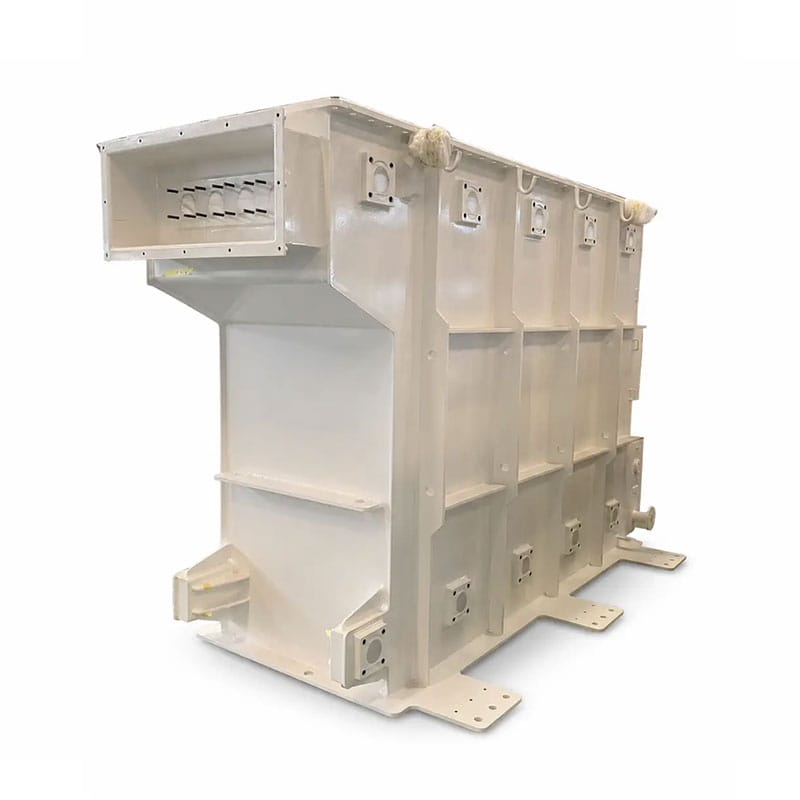
A complete drawing package makes the corrugated transformer tank vs radiator cooling review faster and reduces clarification during quotation.
For a corrugated tank inquiry, send the tank drawing, overall dimensions, corrugation dimensions and layout, material grade and thickness, openings and flange details, cover and sealing requirements, leak-test specification, coating system, quantity, and destination. You can review the available manufacturing range on the Thùng Biến Áp Tôn trang.
For a detachable radiator inquiry, send the radiator drawing or required panel width, center distance, panel pitch, panel quantity, flange dimensions, surface treatment, quantity, and any relevant thermal-design requirements. See the Bộ tản nhiệt biến áp có thể tháo rời loại PC page for the published dimensional range and RFQ fields.
If the project uses a different tank structure or requires non-standard interfaces, the Xe tăng biến áp tùy chỉnh page can be used as the starting point for drawing-based review. For project-specific questions, send the approved or preliminary drawing through the contact page.
The goal of a corrugated transformer tank vs radiator cooling inquiry should not be to request “the better type.” It should be to give the supplier enough verified design input to manufacture the cooling structure that matches the transformer engineering basis.
Kết luận
There is no universal winner in corrugated transformer tank vs radiator cooling. Corrugated walls integrate the cooling surface with the tank body and can support a compact, self-contained arrangement when the validated thermal design allows it. External radiators provide a dedicated and potentially modular cooling surface, can be detachable for transport or maintenance, and can support fan-assisted cooling where the transformer design requires it.
The correct choice comes from total losses, temperature-rise requirements, ambient conditions, oil circulation, installation space, transport limits, mechanical behavior, maintenance strategy, coating, testing, and approved interfaces. When those inputs are defined before fabrication, tank and radiator suppliers can quote against a clear technical basis and the transformer manufacturer can verify the final performance at system level.
Câu hỏi thường gặp
Is a corrugated transformer tank always used without radiators?
No. Corrugated walls provide heat-transfer area, but the complete cooling arrangement depends on transformer losses, temperature-rise limits, enclosure geometry, ambient conditions, and the validated thermal design. A project should not assume that corrugations automatically eliminate every need for external cooling components.
Which is better for ONAN cooling: corrugated transformer tank vs radiator cooling?
Either arrangement may be used in a natural oil and natural air cooling concept when properly engineered. The decision depends on the required heat dissipation, oil-flow path, available surface area, transformer envelope, site clearances, and mechanical design. The final transformer must satisfy the applicable temperature-rise requirements.
Can transformer radiators be removed for shipping?
Detachable radiator designs can be disconnected when the transformer and project arrangement permits it. The shipping plan should define blanking or sealing of openings, protection of flange faces, internal cleanliness, packing, site reassembly, gasket requirements, and any oil-handling procedure.
What information is required to order a corrugated transformer tank?
Provide the approved or preliminary tank drawing, overall dimensions, corrugation pitch and depth, panel layout, material and thickness, openings and interfaces, cover requirements, leak-test specification, coating system, quantity, and destination. Thermal requirements should also be supplied when they affect the component design review.
Does a larger cooling surface guarantee a lower transformer temperature rise?
No. Surface area is only one factor. Oil circulation, air flow, ambient conditions, losses, radiator or fin geometry, connection arrangement, installation clearances, and internal transformer design all affect heat transfer. The corrugated transformer tank vs radiator cooling decision should therefore be validated through the complete transformer thermal design and applicable testing.