Dry type transformer specifications should do more than list rated power, primary voltage, and secondary voltage. For a project buyer, engineering contractor, distributor, or plant electrical team, the specification is the document that aligns transformer performance, installation conditions, testing, accessories, enclosure design, and supplier responsibility before the purchase order is released.
A short specification may look efficient, but missing details often reappear later as technical clarifications: Which loss values are guaranteed? What temperature-rise limits apply? Is the transformer naturally cooled or fan-assisted? Is the enclosure suitable for the actual room? What partial-discharge requirement applies? Which alarm and trip contacts are needed? Are sound levels guaranteed? Which routine and special tests must be documented?
This guide explains how to build practical dry type transformer specifications for project procurement. It focuses on cast resin distribution transformers and on the technical inputs buyers should confirm before comparing quotations. The objective is not to create one universal specification for every transformer. It is to show which fields need project-specific decisions and which values should never be assumed from a generic catalogue.
Start Dry Type Transformer Specifications With the Project Duty
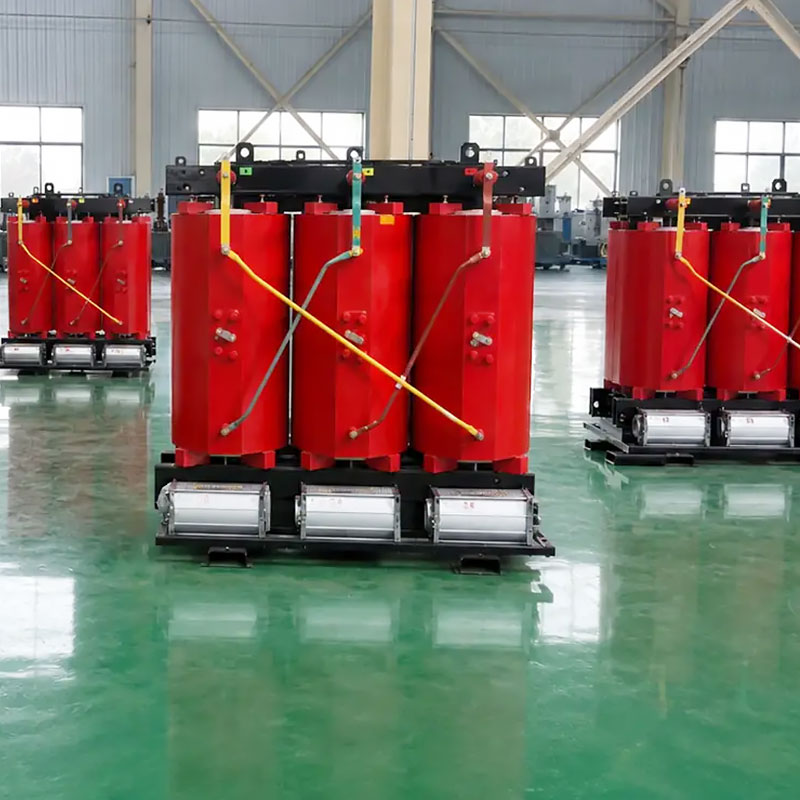
The first section of dry type transformer specifications should describe what the transformer is expected to do in the electrical system. The supplier needs more than a kVA rating. The complete duty normally includes rated capacity, system voltage, frequency, number of phases, connection arrangement, vector group, tapping requirement, load characteristics, short-circuit duty, and the installation environment.
This project context determines many later decisions. A transformer serving a commercial building may have different enclosure, sound, ventilation, monitoring, and load-profile requirements from one installed in an industrial plant. A data-center project may place more emphasis on redundancy, harmonic loading, monitoring, and room heat rejection. A manufacturing facility may prioritize fault withstand, maintenance access, and compatibility with switchgear or busduct.
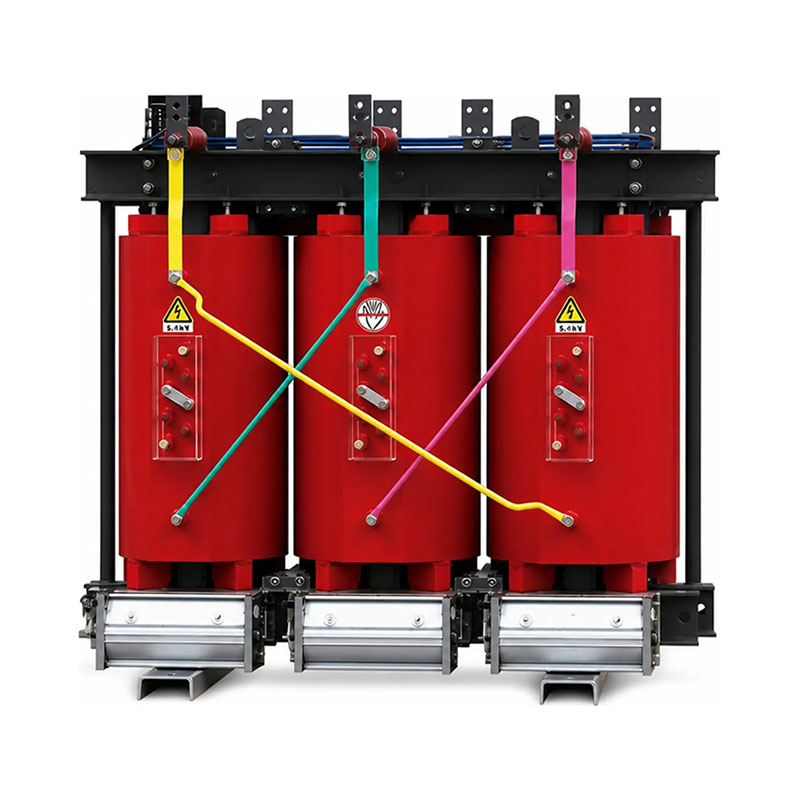
For export projects, Prennox states that its Cast Resin Dry-Type Distribution Transformer can be designed and tested to IEC 60076-11 or another agreed project standard, with final compliance based on the approved design, guaranteed values, and test documentation. That is the correct starting principle: standards and performance commitments must be written into the order, not assumed after production.
Rated Capacity Must Match the Real Load Profile
Rated capacity is usually the first number buyers enter into dry type transformer specifications, but selecting it only from the current connected load can create problems. The engineer should consider actual demand, diversity, future expansion, motor starting, cyclic loading, harmonics, ambient conditions, ventilation, and any redundancy strategy.
Oversizing is not automatically safer. A transformer that operates for long periods at very light load still has no-load loss whenever energized. Undersizing, on the other hand, can increase operating temperature and reduce available margin during peak demand. The correct rating should therefore come from the system load study and expected operating profile.
Prennox currently publishes a reference capacity range of 30–2500 kVA for its documented 10 kV cast resin series. This is a published product range, not a recommendation that every project within that capacity band uses the same design. The final configuration must still be confirmed against the required voltage, impedance, losses, temperature rise, cooling, and installation conditions.
Voltage Ratio, Frequency, Vector Group and Taps Need Exact Values
A procurement-ready specification should state the rated high-voltage and low-voltage values, frequency, vector group, and tapping arrangement. These fields affect compatibility with the network and downstream equipment and should not be left for the supplier to infer.
Prennox lists Dyn11 as an available vector group for its current cast resin product, while also allowing project-specific configurations. It also identifies off-circuit tapping with a project-specific tapping range. Therefore, dry type transformer specifications should clearly state the required vector group and tap positions rather than simply writing “standard taps.”
If the project requires a specific neutral arrangement, grounding method, terminal orientation, busbar connection, cable box, surge protection, or interface with switchgear, those details belong in the electrical and mechanical schedule as well.
Guaranteed Losses Should Be Written as Contract Values
Losses influence transformer operating cost, room heat load, cooling demand, and system efficiency. For that reason, dry type transformer specifications should define which values are guaranteed and the conditions under which they apply.
Typical technical schedules distinguish no-load loss from load loss. No-load loss is associated mainly with the energized core, while load loss is associated mainly with winding resistance and additional load-dependent effects. The supplier should confirm guaranteed values in the approved technical data sheet, and the factory test documentation should report the corresponding measured results.
The buyer should avoid vague requirements such as “high efficiency” unless the dry type transformer specifications also provide an applicable efficiency regulation, project target, or guaranteed loss schedule. Prennox’s product page explicitly states that guaranteed losses are confirmed in the approved technical data sheet rather than represented by one universal value for the entire product range.
| Specification field | What the buyer should define | Why it matters |
|---|---|---|
| Rated capacity | Required kVA based on the project load study | Sets the transformer duty and affects loss, impedance and thermal design. |
| Voltage ratio | Primary and secondary rated voltages | Ensures compatibility with the network and connected equipment. |
| Frequency | Project system frequency | Affects electromagnetic design and performance. |
| Vector group | Required winding connection and phase displacement | Controls system compatibility and parallel-operation considerations. |
| Guaranteed losses | No-load and load-loss limits under stated conditions | Provides measurable performance criteria for factory acceptance. |
| Impedance | Required value or approved tolerance basis | Affects fault current, voltage regulation and parallel operation. |
Short-Circuit Impedance Is a System Parameter, Not a Catalogue Detail
Short-circuit impedance deserves a dedicated line in dry type transformer specifications. It affects prospective short-circuit current, voltage drop under load, load sharing between transformers, and coordination with protection and switchgear.
The correct value depends on the transformer design, system study, and the approved dry type transformer specifications. It should not be copied from another transformer of similar capacity unless the electrical engineer confirms that the same impedance target is suitable.
Prennox currently states that short-circuit impedance is determined according to rated capacity and the approved design. This is a useful procurement boundary: the buyer should specify the required value or acceptable range, while the supplier confirms the design that meets it.
Insulation System and Temperature Rise Must Be Specified Together

One of the most common mistakes in dry type transformer specifications is to state an insulation class without defining the required temperature rise or operating conditions. Insulation thermal capability and permitted operating temperature are related, but they are not the same specification field.
IEC 60076-11:2018 is the IEC standard specifically covering dry-type transformers within its stated voltage and power scope. It addresses dry-type transformer requirements and includes environmental, climatic, fire-behaviour, enclosure, altitude, dielectric, and thermal considerations.
Prennox lists H-class insulation materials as available for its documented cast resin series, but final insulation and temperature-rise requirements are confirmed per project. Buyers should therefore define the expected insulation system, temperature-rise limits, maximum ambient conditions, altitude where relevant, and any unusual load cycle.
If the project uses additional flexible insulation materials, the material requirements should be consistent with the complete insulation system. Prennox also supplies F-Class DMD for dry-type transformer layer and phase insulation applications, but a component thermal class should never be used by itself to claim the thermal class of the complete transformer.
Cooling Method Must Match the Required Rating
Cast resin transformers commonly use natural-air cooling, with fans available when forced-air operation is required. Prennox lists AN as an available natural-air cooling method and AF as an option with cooling fans for the documented product series.
In dry type transformer specifications, the buyer should define whether the required rating applies under natural-air operation only or whether a higher fan-assisted rating is required. If AF operation is included, the specification should also cover fan quantity, fan power supply, control logic, temperature setpoints, alarm and trip functions, fan failure indication, and the operating rating expected with fans unavailable.
Ventilation around the transformer is equally important and should be coordinated with the dry type transformer specifications. A transformer can reject heat to the room, but the room still has to remove that heat. Poor room ventilation can raise ambient temperature around the transformer and reduce thermal margin. The electrical specification and mechanical/HVAC design should therefore use the same loss and heat-rejection assumptions.
Enclosure and IP Requirements Must Reflect the Actual Installation
A dry-type transformer may be supplied as an open unit or with a protective enclosure. The right choice depends on whether it is installed in a controlled electrical room, industrial environment, public-access area, dusty location, or other project-specific setting.
Prennox states that open indoor construction or a specified protective enclosure can be supplied, with the enclosure rating confirmed for the installation environment. That wording is important because dry type transformer specifications should not use one enclosure rating as a universal default.
When an enclosure is required, the dry type transformer specifications should state the required degree of protection, ventilation arrangement, cable-entry direction, removable panels, access doors, locking requirements, lifting arrangement, overall size limits, and interface with busduct or cables. The enclosure can affect transformer cooling, so performance should be evaluated with the final enclosure design rather than with an open transformer alone.
The current edition of IEC 60076-11 explicitly includes enclosure management in relation to transformer performance. This makes the enclosure a thermal as well as mechanical specification item.
Environmental, Climatic and Fire Requirements Need Project Decisions
Modern dry type transformer specifications often include environmental, climatic, and fire-behaviour requirements. These classifications should be selected from the actual installation conditions rather than copied from another project.
IEC 60076-11:2018 introduced revised climatic classes, links between location and environmental classes, fire-behaviour provisions, and a seismic class. It also addresses altitude effects on dielectric and thermal features. These requirements can materially change design and testing expectations.
For cold climates, humid industrial environments, seismic areas, high-altitude sites, or projects with specific fire-performance requirements, the buyer should identify the required class and the evidence expected. Good dry type transformer specifications define the actual environmental condition instead of using a vague phrase such as “suitable for harsh environment.”
Partial Discharge Should Have a Defined Requirement and Test Basis
Partial discharge is a key quality topic for cast resin insulation systems because localized electrical discharge can indicate insulation defects or electric-field stress. Prennox identifies partial-discharge measurement as one of the routine tests that may apply to its cast resin transformers.
In dry type transformer specifications, the buyer should state the applicable standard, measurement condition, acceptance level where required, and whether the result must appear on the routine test report. The project should not use an arbitrary low number simply because it appears more stringent; the requirement should be consistent with the governing standard, voltage level, design, and customer specification.
IEC 60076-3 covers transformer insulation levels, dielectric tests, and external clearances in air. For dry-type transformers, the applicable dielectric and partial-discharge requirements should be interpreted together with IEC 60076-11 and the approved project standard.
Sound Level Should Be Specified When the Installation Is Sensitive
Transformer noise can become an important project issue in hospitals, schools, residential buildings, offices, data centers, and mixed-use developments. A generic statement such as “low noise” is difficult to enforce because it does not define a measurable limit or test method.
If acoustic performance matters, dry type transformer specifications should identify the guaranteed sound requirement and the measurement standard. IEC 60076-10:2016 defines sound-pressure and sound-intensity measurement methods used to determine sound power levels for transformers and associated cooling devices.
The buyer should also remember that factory and site acoustic conditions differ. Walls, floors, ventilation ducts, other equipment, and structural vibration can change the sound experienced at the installation. The transformer sound guarantee should therefore be coordinated with the building acoustic design rather than treated as the sole site-noise control measure.
Monitoring, Alarm and Trip Functions Should Be Written Into the I/O Schedule
Temperature monitoring is commonly included with cast resin transformers, but different projects require different levels of control. Prennox currently lists temperature display, fan control, alarm, and trip functions as available monitoring options.
Detailed dry type transformer specifications should identify the number and location of temperature sensors, display requirements, alarm and trip stages, fan start/stop logic, relay outputs, communication protocol where required, local/remote status, auxiliary power supply, and terminal-block requirements.
These details should then be reflected in the project I/O list and control schematic. If the transformer supplier and building-management or SCADA contractor work from different assumptions, commissioning problems can occur even when the transformer itself is electrically correct.
Routine, Type and Special Tests Need to Be Separated
Another common procurement problem is the phrase “all tests according to IEC.” That wording does not explain which tests are routine, which are type tests, which require existing valid evidence, and which must be performed specifically on the ordered unit.
Prennox states that routine testing for its cast resin transformers may include winding resistance, voltage ratio and vector group, no-load loss and current, load loss and short-circuit impedance, routine dielectric tests, and partial-discharge measurement where applicable. Temperature-rise testing, sound-level measurement, environmental tests, fire-behaviour tests, and third-party inspection can be agreed when required.
| Test area | What the specification should clarify | Procurement purpose |
|---|---|---|
| Winding resistance | Applicable routine-test requirement and recorded results | Confirms winding electrical condition and supports test consistency. |
| Ratio and vector group | Required ratio, taps and connection group | Confirms network compatibility. |
| No-load and load loss | Guaranteed values and applicable test conditions | Verifies contractual performance. |
| Impedance | Guaranteed value and permitted tolerance | Supports protection and system studies. |
| Dielectric tests | Applicable standard and insulation levels | Verifies insulation withstand requirements. |
| Partial discharge | Test condition, limit and reporting requirement | Provides a quality check on the cast resin insulation system. |
| Temperature rise | Whether project-specific testing or valid type evidence is required | Demonstrates thermal performance under defined conditions. |
| Sound | Guarantee and test method where required | Supports acoustically sensitive installations. |
Well-written dry type transformer specifications identify the required test package before quotation so suppliers price and schedule the same scope.
Dimensions, Weight and Interface Drawings Affect the Whole Project
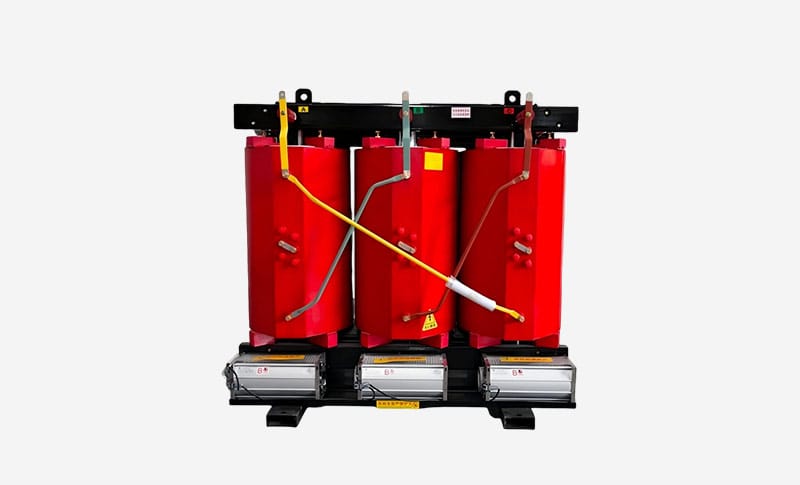
Transformer procurement is not complete when the electrical data sheet is approved. The physical unit has to fit the electrical room, foundation, cable route, busduct, switchgear lineup, lifting path, and maintenance space.
The dry type transformer specifications should therefore define maximum dimensional constraints where applicable and require a general arrangement drawing before manufacturing. The drawing should identify overall dimensions, wheel or base arrangement, lifting points, center of gravity where required, high- and low-voltage terminal positions, enclosure doors or removable panels, fan arrangement, temperature controller, grounding points, and cable-entry provisions.
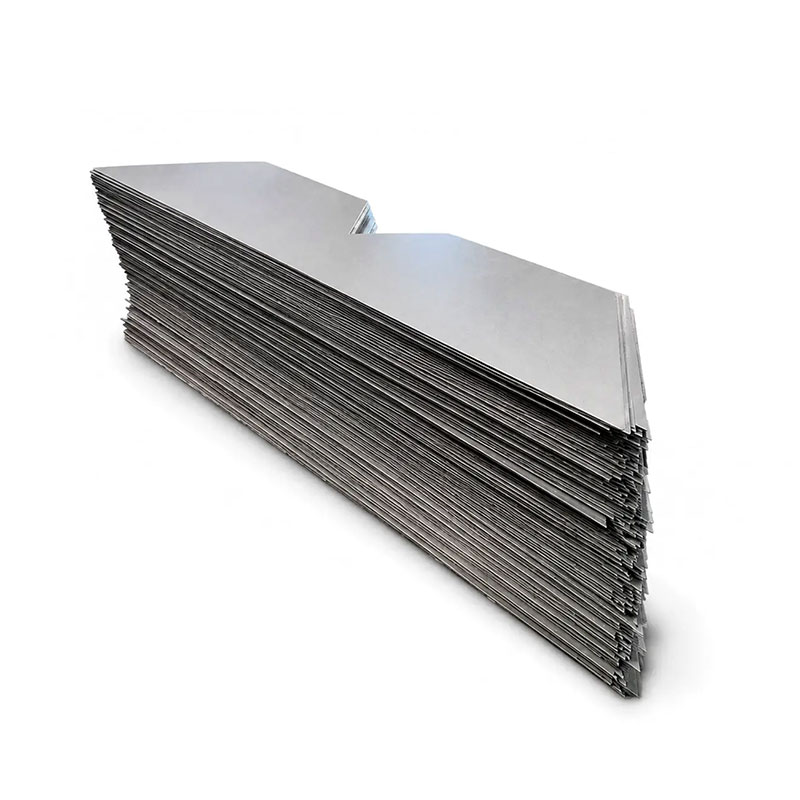
For projects where the transformer core is purchased separately, Prennox also supplies CRGO Laminated Cores for Dry-Type Transformers to approved drawings. However, core component data should not be copied directly into complete-transformer dry type transformer specifications unless it is part of the approved transformer design.
Common Dry Type Transformer Specification Mistakes
Using Only Capacity and Voltage
Capacity and voltage identify the basic transformer duty, but they do not define losses, impedance, temperature rise, insulation, enclosure, sound, monitoring, tests, or environmental requirements.
Specifying an Insulation Class Without a Temperature-Rise Requirement
The insulation system’s thermal capability and the permitted winding temperature rise are related but distinct. Both should be defined according to the approved standard and project duty.
Copying an IP Rating From Another Project
The enclosure rating should match the real indoor environment, ventilation arrangement, personnel-access requirement, and transformer thermal design.
Writing “IEC Standard” Without Naming the Applicable Parts
Different parts of the IEC 60076 series address general requirements, dielectric tests, sound, and dry-type transformers. The order should identify the standards that actually govern the project.
Leaving Special Tests Until After Order Placement
Temperature-rise, sound, environmental, fire, seismic, or third-party witness requirements can affect design, schedule, documentation, and factory planning. They should be stated during quotation.
A Practical RFQ Checklist for Dry Type Transformers
Before sending an inquiry, the buyer should prepare enough dry type transformer specifications data for suppliers to quote against the same basis. A strong RFQ for dry type transformer specifications normally includes rated capacity, voltage ratio, frequency, vector group, tapping range, short-circuit impedance, guaranteed losses, cooling method, insulation and temperature-rise requirements, enclosure, environmental conditions, altitude, sound requirement where applicable, monitoring functions, accessories, tests, documentation, quantity, destination, and applicable standards.
It should also include the single-line diagram, load information, general arrangement constraints, cable or busduct interfaces, and any customer-specific technical specification that overrides normal supplier practice.
If a parameter is genuinely open for supplier proposal, identify it as such. Do not leave a field blank if the project team actually has a mandatory requirement. Clear responsibility in the dry type transformer specifications reduces later drawing revisions and makes bid comparison more reliable.
What Prennox Needs for a Dry-Type Transformer Review
For project review, send the rated capacity, voltage ratio, frequency, vector group, tapping range, guaranteed loss requirements, cooling method, enclosure requirements, site conditions, applicable standard, quantity, and destination. These are also the main RFQ fields published on the current Cast Resin Dry-Type Distribution Transformer page.
If insulation-system requirements are still being coordinated, the existing Transformer Insulation Materials Guide can help identify material categories, while the complete transformer specification should remain the controlling project document.
You can also review the Dry-Type Transformers category or send the single-line diagram, technical schedule, and project requirements through the Contact page.
The goal is to make dry type transformer specifications complete enough that electrical performance, mechanical interfaces, tests, monitoring, and installation conditions are understood before final quotation and drawing approval.
Conclusion
Dry type transformer specifications are most useful when they convert the project’s electrical and installation requirements into measurable supplier commitments. Rated capacity and voltage are only the starting point. Losses, impedance, temperature rise, insulation system, cooling method, enclosure, environmental conditions, partial discharge, sound, monitoring, tests, dimensions, and documentation all influence whether the transformer will fit the real project.
Buyers should avoid copying generic values from another installation or treating catalogue options as guaranteed project performance. Define what is mandatory, identify which standards apply, state which values must be guaranteed, and separate routine tests from type or special tests before quotations are compared.
That approach makes dry type transformer specifications easier to audit, reduces technical ambiguity, and gives both buyer and supplier a clear basis for transformer design approval, factory acceptance, installation, and commissioning.
FAQ
What should dry type transformer specifications include?
They should include rated capacity, voltage ratio, frequency, vector group, tapping range, impedance, guaranteed losses, insulation and temperature-rise requirements, cooling method, enclosure, site conditions, monitoring, accessories, test requirements, dimensions, documentation, quantity, and applicable standards.
Which IEC standard applies specifically to dry-type transformers?
IEC 60076-11 is the IEC standard specifically covering dry-type transformers within its stated scope. Other IEC 60076 parts may also apply to general requirements, dielectric tests, sound measurement, and related transformer requirements.
Is insulation class the same as transformer temperature rise?
No. Insulation class indicates the thermal capability of the insulation system, while temperature rise describes how much the transformer temperature may increase above the defined ambient under specified conditions. Both need to be coordinated in the design.
Should partial discharge be included in dry type transformer specifications?
For cast resin transformers, partial-discharge requirements are commonly relevant. The specification should define the governing standard, applicable test condition, acceptance requirement, and reporting expectation rather than using an unsupported generic limit.
What information should be sent before requesting a cast resin transformer quote?
Send rated capacity, voltage ratio, frequency, vector group, taps, impedance requirement, guaranteed losses, cooling method, enclosure, site conditions, monitoring requirements, applicable standards, tests, quantity, destination, and any drawings or project technical schedules that affect the dry type transformer specifications.