A cast resin vs VPI transformer decision should begin with the electrical room, the site environment, the required insulation performance, maintenance capability, ventilation, fire strategy, and the project’s testing requirements. Both technologies are dry-type transformer constructions, but they protect the windings in different ways and create different operating and maintenance priorities.
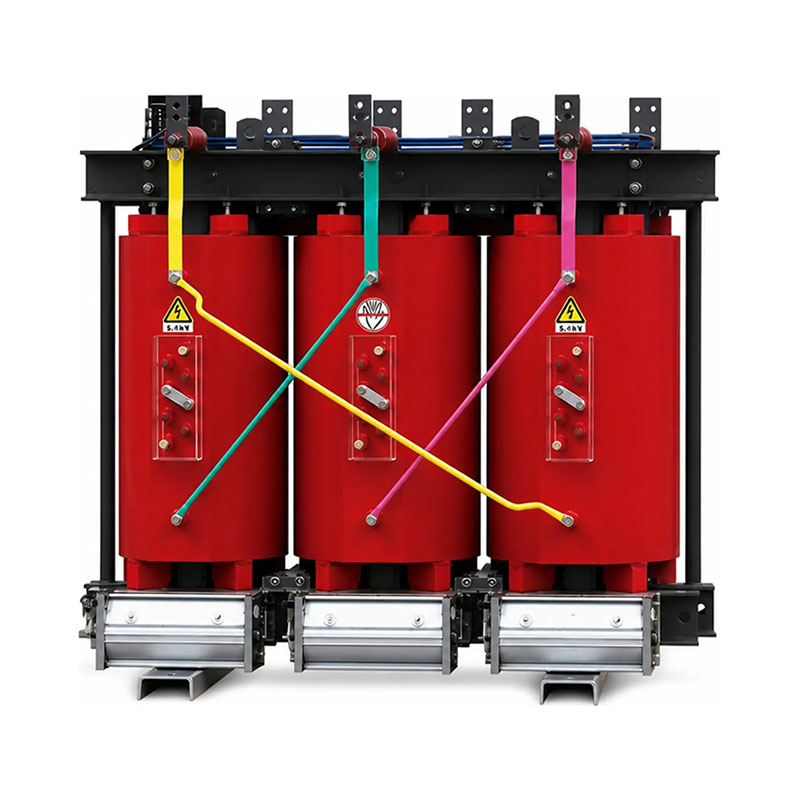
A cast resin transformer encapsulates the winding in a solid resin system. A VPI transformer uses vacuum pressure impregnation to introduce insulating varnish or resin into the winding insulation before curing. Both eliminate the insulating-oil system found in liquid-filled transformers, but neither should be treated as universally superior for every indoor installation.
This guide explains how to compare cast resin vs VPI transformer options for commercial buildings, industrial plants, data centers, hospitals, schools, infrastructure projects, and other indoor applications. It focuses on insulation construction, moisture and contamination, partial discharge, short-circuit forces, ventilation, repairability, maintenance, fire behavior, sound, enclosure design, testing, and RFQ inputs. Prennox currently supplies cast resin dry-type transformers; VPI is discussed here as a comparison technology rather than as a Prennox product offering.
What Is the Main Difference Between Cast Resin and VPI Transformers?
The main difference is how the winding insulation is built and protected.
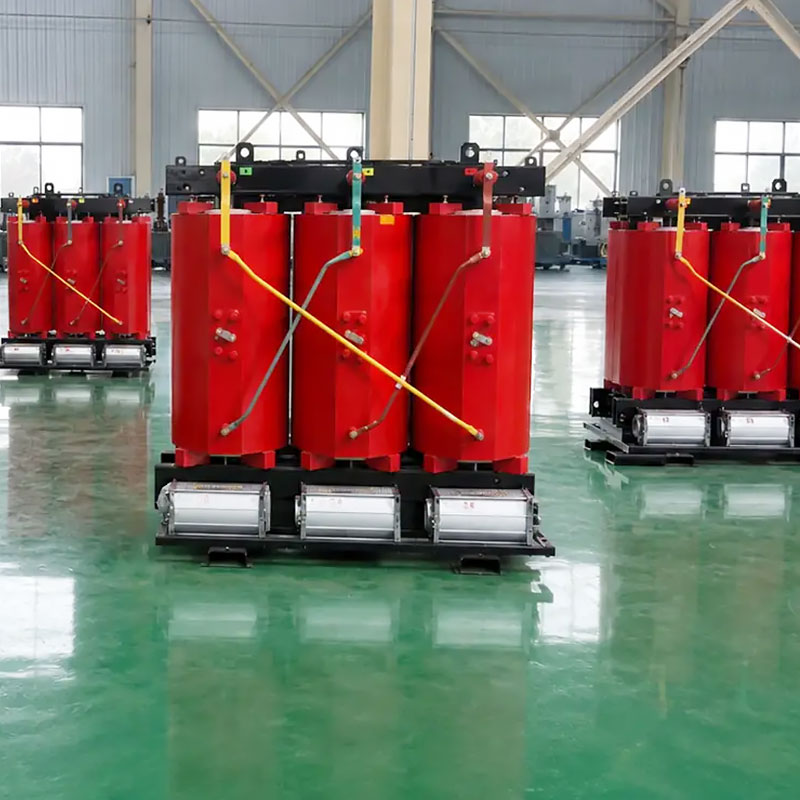
In a cast resin transformer, the winding is placed in a mold and encapsulated with a resin system under controlled manufacturing conditions. After curing, the winding becomes a comparatively rigid solid-insulation structure. Prennox’s current Cast Resin Dry-Type Distribution Transformer page describes a controlled resin-mixing and vacuum-casting process, with the cast coil system providing electrical insulation and mechanical strength.
In a VPI transformer, the winding assembly is placed under vacuum and then exposed to insulating varnish or resin under pressure so the liquid penetrates the porous insulation system. The winding is then cured. The final structure remains more open than a fully encapsulated cast coil.
This construction difference drives most cast resin vs VPI transformer trade-offs. Cast resin protects more of the winding surface within a solid encapsulation system. VPI relies more heavily on the impregnated insulation and the controlled environment around the winding.
Both Are Dry-Type Transformers, but “Dry Type” Is Not One Construction
Dry-type transformer is a broad category. It describes transformers that do not use insulating liquid around the active part, but it does not define one winding-insulation process.
IEC 60076-11 specifically addresses dry-type transformers and covers requirements including service conditions, climatic and environmental classification, fire behavior, enclosure considerations, thermal performance, and testing. The standard framework applies to dry-type construction generally, while the exact insulation technology, winding design, resin system, and manufacturing process remain project-specific.
This means a cast resin vs VPI transformer specification should not simply say “dry-type transformer according to IEC” and assume the construction is understood. The buyer should identify the intended insulation system, environmental conditions, required tests, enclosure, cooling mode, and guaranteed performance.
Environmental Exposure Is One of the Most Important Selection Factors
Indoor electrical rooms are not all clean, dry, and temperature-controlled. Construction dust, humidity, condensation, salt, industrial contamination, conductive particles, chemical vapors, and long shutdown periods can all affect dry-type insulation.
Cast resin windings place the conductor and winding insulation inside a cured resin body, which can reduce direct exposure of the winding surface to the surrounding environment. This can be advantageous in projects where humidity, dust, or contamination is difficult to control.
VPI windings remain more exposed to the surrounding air because the winding is impregnated rather than fully encapsulated. The varnish or resin protects the insulation, but the open construction may place greater importance on room cleanliness, humidity control, enclosure design, and maintenance.
In a cast resin vs VPI transformer study, environmental resistance should therefore be evaluated against the actual room condition rather than a simple “indoor” label.
Moisture Management Should Be Part of the Installation Strategy
Moisture is a major concern in any cast resin vs VPI transformer comparison because surface contamination and absorbed moisture can affect insulation resistance and increase the risk of tracking or discharge under unfavorable conditions.
A cast resin winding can provide a more sealed external insulation surface around the conductor system. This does not make the transformer immune to condensation, surface contamination, damaged resin, or poor storage, but it can reduce direct moisture access to internal winding insulation.
A VPI transformer can perform reliably in a suitable environment, but its insulation system typically depends more on controlled humidity, clean surfaces, and proper ventilation. If a VPI transformer is stored or operated in a damp room, drying or additional inspection may be required before energization.
For cast resin vs VPI transformer procurement, the RFQ should state site humidity, condensation risk, storage conditions, room ventilation, and any enclosure requirement so the supplier can confirm the appropriate design.
Partial Discharge Should Be Verified by Test, Not Assumed From Technology
Partial discharge is an important quality topic for dry-type transformer insulation, especially at medium voltage. Voids, interfaces, contamination, local electric-field stress, manufacturing defects, or aging can create localized discharge activity.
Cast resin manufacturing aims to control voids within the encapsulation through resin formulation, vacuum processing, mold design, curing, and inspection. VPI manufacturing aims to impregnate winding insulation thoroughly so air pockets and unimpregnated regions are minimized.
Neither process name alone guarantees a specific partial-discharge level in a cast resin vs VPI transformer evaluation. A meaningful cast resin vs VPI transformer comparison should use the actual specified limit, test voltage, test method, and factory test result.
Prennox lists partial-discharge measurement as an applicable routine test for its cast resin product where required by the design and standard. The final acceptance value should come from the approved project specification rather than a generic internet claim.
Mechanical Restraint and Short-Circuit Forces Depend on the Complete Winding Design
During a short circuit, transformer windings can experience substantial electromagnetic forces, making mechanical design another major cast resin vs VPI transformer comparison point. Mechanical strength therefore matters as much as dielectric performance.
A cast resin winding forms a rigid encapsulated structure, which can provide strong mechanical restraint when the winding and resin system are properly designed. VPI windings use insulation, spacers, bracing, conductor geometry, and impregnated resin to create mechanical integrity without a fully cast solid body.
It is tempting to conclude that cast resin always has higher short-circuit withstand. That is too broad. A cast resin vs VPI transformer comparison should use the actual transformer design, impedance, fault-current study, winding geometry, mechanical supports, applicable short-circuit withstand requirements, and supplier evidence.
The insulation technology influences the mechanical concept, but the finished transformer—not the label “cast resin” or “VPI”—must satisfy the required short-circuit performance.
| Selection factor | Cast resin transformer | VPI transformer |
|---|---|---|
| Winding protection | Winding encapsulated in a cured solid resin system | Winding insulation vacuum-pressure impregnated and cured |
| Environmental exposure | More of the winding is isolated from direct ambient exposure | More dependent on controlled room and surface cleanliness |
| Cooling surface | Heat must pass through the cast coil surface and surrounding air | Open winding geometry can provide direct air access around insulated conductors |
| Repair approach | Internal cast-coil damage may require coil replacement | Some localized insulation or winding repairs may be more accessible, subject to design and damage |
| Process control | Resin mixing, vacuum casting, mold, curing and void control are critical | Vacuum, pressure, impregnation, varnish penetration and curing are critical |
| Site focus | Often considered where environmental protection is important | Often considered in controlled indoor electrical rooms |
Cooling Paths Differ Between Cast and Open VPI Windings
Both technologies rely primarily on air cooling, but the winding surface and airflow path can differ significantly in a cast resin vs VPI transformer design.
In cast resin designs, heat generated in the conductor must move through the solid insulation system and then from the cast surface to surrounding air. Coil geometry, resin thermal properties, cooling ducts, surface area, natural convection, and optional fans all affect temperature rise.
VPI windings can have more open airflow around insulated conductors and winding channels, depending on the design. This can support effective convective cooling, but open airflow also means dust and contamination can reach more of the winding surface.
A cast resin vs VPI transformer choice should therefore consider both heat transfer and environmental exposure. Better airflow is not automatically better if the room is dusty, and stronger encapsulation is not automatically better if the thermal design is poor.
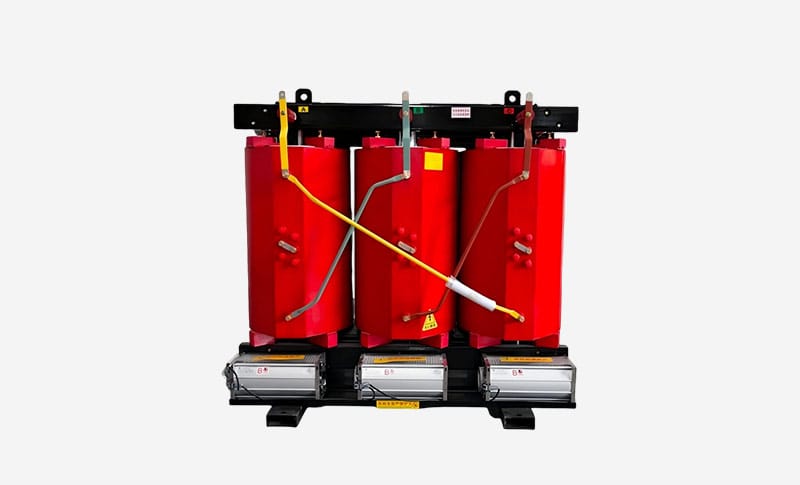
Prennox currently lists AN natural-air cooling for its cast resin transformer, with AF forced-air cooling available when fans are required. Cooling performance is confirmed for the final approved design rather than assigned one universal rating.
Room Ventilation Remains Essential for Both Technologies
Neither side of a cast resin vs VPI transformer selection removes transformer losses from the building. No-load and load losses become heat inside the electrical room, and that heat must ultimately be removed by natural ventilation, mechanical ventilation, or HVAC.
For both sides of a cast resin vs VPI transformer comparison, the project engineer should obtain guaranteed loss data and provide those values to the building mechanical team. Room heat-load calculations should use the actual transformer design, not a generic kW estimate.
If forced-air cooling is used, the project should also consider fan power, airflow path, fan failure, control setpoints, alarm/trip logic, maintenance access, and whether full rated capacity is available when fans are unavailable.
Enclosure Design Can Change the Real Operating Environment
A dry-type transformer installed inside a protective enclosure no longer operates in the same airflow conditions as an open transformer. The enclosure can improve personnel protection and reduce direct exposure to dust or accidental contact, but it can also restrict convection.
Prennox currently offers open indoor construction or a specified protective enclosure for its cast resin product, with the enclosure rating confirmed for the installation environment.
In a cast resin vs VPI transformer comparison, enclosure design can narrow the environmental difference between the two technologies if a VPI unit is installed in a carefully controlled enclosure. Conversely, a poorly ventilated enclosure can create a thermal problem for either construction.
The transformer rating, enclosure, ventilation openings, filters where applicable, and fan arrangement should therefore be approved as one system.
Repairability Is More Complex Than “VPI Can Be Repaired”
VPI windings are often described as easier to repair because the winding is not fully embedded inside a thick cast body. In some cases, technicians may gain better access to insulation, leads, bracing, or conductor sections.
That does not mean every VPI winding is economically or technically repairable. The feasibility depends on the damage location, voltage class, winding construction, insulation contamination, conductor damage, core condition, labor capability, and whether the repaired transformer can be retested to the required standard.
Cast resin coil damage that extends inside the encapsulated winding can be much more difficult to repair locally and may require replacement of the complete coil. Surface damage may be evaluated differently depending on severity and manufacturer procedure.
A realistic cast resin vs VPI transformer lifecycle study should therefore ask what type of failure can actually be repaired at the site or service center and what tests are required before return to service.
Maintenance Requirements Differ, but Neither Is Maintenance-Free
Dry-type transformers do not require oil sampling or oil leak inspection, but a cast resin vs VPI transformer maintenance plan still needs routine inspection.
Cast resin maintenance typically includes checking resin surfaces for cracks or damage, cleaning dust from cooling surfaces and ventilation paths, checking terminals and bus connections, inspecting fans and temperature controls, and reviewing operating temperature.
VPI maintenance can include many of the same tasks, with added attention to exposed winding surfaces, dust accumulation, moisture, contamination, insulation discoloration, tracking, bracing, and condition of the impregnated insulation system.
For a cast resin vs VPI transformer decision, the correct question is not which transformer needs “no maintenance.” The question is which maintenance program matches the site’s staff, shutdown schedule, cleanliness, spare strategy, and inspection capability.
Fire Behavior Should Be Specified Through the Applicable Standard
Both technologies avoid a liquid-oil pool, which is one reason dry-type transformers are widely used inside buildings. However, solid insulation systems are still combustible or thermally degradable materials, and fire performance depends on the full transformer construction.
IEC 60076-11 includes fire-behavior classification for dry-type transformers together with environmental and climatic classifications. Buyers should specify the required classification where the project demands it and request the supporting test evidence or compliance documentation.
A cast resin vs VPI transformer comparison should therefore use verified fire-class evidence rather than statements such as “cast resin is nonflammable” or “VPI is always less fire-safe.” Resin formulation, insulation system, enclosure, cables, ventilation, and the room fire strategy all matter.
Sound Level Is Not Determined by the Insulation Process Alone
Transformer sound is generated mainly by magnetic and mechanical effects in the core and windings, while fans and enclosures can add additional noise. The winding insulation technology can influence structural damping, but it does not set the final sound level by itself.
When comparing cast resin vs VPI transformer quotations for hospitals, offices, residential buildings, data centers, or other acoustically sensitive sites, buyers should request a guaranteed sound value and the applicable test method.
IEC 60076-10 provides measurement methods for transformer sound. The project should compare actual guaranteed values rather than assuming one dry-type technology will always be quieter.
Harmonic Loads Need a Design Review for Either Transformer Type
Variable-frequency drives, UPS systems, switch-mode power supplies, server loads, and other nonlinear equipment can increase harmonic current. Harmonics can raise winding eddy-current and stray losses and may increase neutral current in some systems.
A cast resin vs VPI transformer comparison should therefore include the load spectrum where significant harmonics are expected. Both technologies can be designed for nonlinear loads, but the conductor arrangement, winding geometry, thermal design, neutral sizing, shielding, and loss calculation must be appropriate.
Do not select cast resin or VPI solely from a label such as “data-center transformer.” Send the actual load or harmonic design requirement to the transformer supplier.
Partial Discharge, Losses and Temperature Rise Should Be Compared as Guaranteed Values
Marketing comparisons often use generic partial-discharge values, efficiency claims, or temperature-rise statements. Those numbers may come from different voltage classes, ratings, insulation systems, or test conditions.
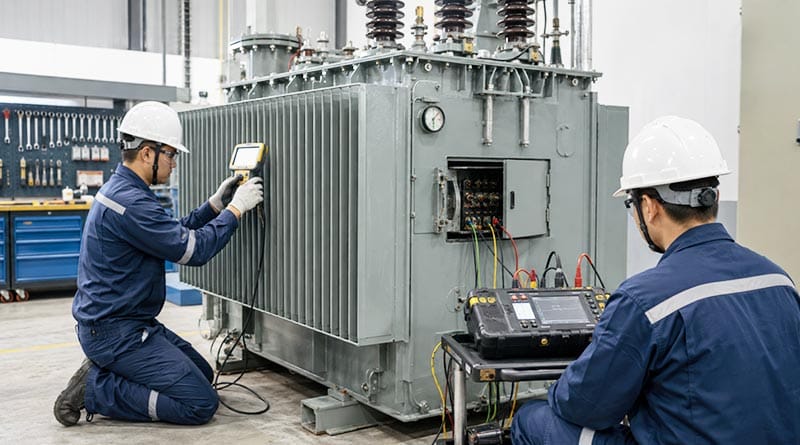
The correct cast resin vs VPI transformer comparison uses quotation-specific guaranteed values for no-load loss, load loss, impedance, temperature rise, sound where required, partial discharge where applicable, and cooling rating.
| Performance item | What the buyer should compare | What to avoid |
|---|---|---|
| No-load loss | Guaranteed value for the same rating and voltage | Generic efficiency claims |
| Load loss | Guaranteed value at the stated reference condition | Values measured or corrected differently |
| Temperature rise | Specified winding/thermal limits and cooling mode | Insulation class used as a substitute for temperature rise |
| Partial discharge | Specified limit, test voltage and test method | Technology-wide “typical” numbers with no test context |
| Sound | Guaranteed sound level and measurement method | “Low-noise” labels |
| Impedance | Approved value and tolerance | Copying another transformer’s value |
Construction and Commissioning Conditions Can Influence the Better Choice
Transformer rooms are often dirtier and more humid during construction than they will be during normal operation, which can materially affect a cast resin vs VPI transformer decision. Concrete work, cutting, drilling, open doors, temporary ventilation, and delayed HVAC commissioning can expose dry-type windings to dust and moisture before the building is complete.
A cast resin vs VPI transformer project should therefore consider the installation period as well as the final operating environment. If the transformer arrives months before the room is controlled, storage heaters, protective wrapping, temporary environmental control, or delayed installation may be needed.
This is particularly important for VPI designs because more of the winding insulation surface remains exposed to ambient air, but cast resin units also need clean and dry storage to prevent contamination and condensation.
Common Cast Resin vs VPI Transformer Selection Mistakes
Choosing Cast Resin Only Because the Site Is Indoors
Indoor location alone does not justify one insulation system. Room humidity, dust, ventilation, fire classification, maintenance access, loading, and testing requirements should also be reviewed.
Choosing VPI Only Because It May Be Easier to Repair
Repairability depends on the actual damage and winding construction. Some failures require major rewinding or replacement regardless of the insulation technology.
Comparing Generic Partial-Discharge Numbers
A valid cast resin vs VPI transformer comparison needs the same test voltage, standard, measurement method, and acceptance basis.
Ignoring the Enclosure
A high-protection enclosure can improve environmental separation but restrict cooling. The transformer and enclosure should be thermally reviewed together.
Assuming Dry Type Means No Fire Engineering
Dry-type construction removes insulating oil, but winding insulation, cables, enclosure, ventilation and room fire design still need to meet project requirements.
How to Build a Better Cast Resin vs VPI Transformer RFQ
A strong cast resin vs VPI transformer RFQ should define the project requirements first and allow the transformer design to demonstrate compliance.
Electrical duty: rated capacity, primary and secondary voltage, frequency, vector group, tapping range, impedance, load profile, harmonics, and guaranteed losses.
Site conditions: indoor room type, ambient temperature, altitude, humidity, condensation risk, dust, contamination, corrosive atmosphere, ventilation, and construction-phase storage conditions.
Insulation system: identify cast resin, VPI, or supplier proposal if both technologies are acceptable. State the required thermal and environmental classifications.
Cooling and enclosure: natural or forced air, fan-control requirements, enclosure degree of protection, ventilation openings, filters where applicable, and room heat-rejection conditions.
Performance: guaranteed losses, temperature rise, partial-discharge requirement where applicable, sound level where required, short-circuit performance, and efficiency target.
Monitoring and tests: temperature sensors, fan control, alarm/trip contacts, communications, routine tests, special tests, third-party inspection, and required certificates.
What Prennox Needs Before Reviewing a Cast Resin Project
Prennox currently supplies a three-phase cast resin dry-type distribution transformer for indoor power distribution. The documented 10 kV series has a reference capacity range of 30–2500 kVA, with AN natural-air cooling and optional AF forced-air cooling. The product can be supplied as an open indoor unit or with a specified protective enclosure.
For quotation, Prennox asks buyers to provide rated capacity, voltage ratio, frequency, vector group, tapping range, guaranteed loss requirements, cooling method, enclosure requirements, site conditions, applicable standard, quantity, and destination.
For a broader project specification checklist, review the earlier Dry Type Transformer Specifications for Project Buyers guide. You can also review the Dry-Type Transformers category or send the single-line diagram and project schedule through the Contact page.
Conclusion
There is no universal winner in a cast resin vs VPI transformer comparison. Cast resin construction can be attractive where winding encapsulation, environmental separation, and a rigid coil structure support the project requirements. VPI construction can be attractive in clean, controlled electrical rooms where an open impregnated winding design fits the thermal, maintenance, and service strategy.
The correct choice should consider humidity, dust, contamination, ventilation, partial-discharge requirements, short-circuit design, enclosure, repair strategy, sound, harmonic loading, guaranteed losses, fire classification, maintenance capability, and site commissioning conditions.
Most importantly, compare complete transformer designs—not technology labels. The better transformer is the one that meets the same electrical duty and site specification with verified test data, a clear maintenance plan, and no unresolved environmental or installation assumptions.
FAQ
What is the main difference between a cast resin vs VPI transformer?
A cast resin transformer encapsulates the winding in a solid cured resin system. A VPI transformer uses vacuum and pressure to impregnate the winding insulation with varnish or resin before curing, leaving a more open winding structure.
Is cast resin always better in humid environments?
Cast encapsulation can reduce direct exposure of winding insulation to humidity and contamination, but the complete transformer still requires proper enclosure, ventilation, storage, cleaning, and environmental design. Site conditions and manufacturer evidence should determine suitability.
Is a VPI transformer easier to repair?
Some VPI winding areas can be more accessible than a fully cast winding, but repairability depends on the location and severity of damage, voltage class, winding design, insulation condition, and the testing required before return to service.
Which transformer has lower partial discharge?
There is no universal technology-wide answer. A cast resin vs VPI transformer comparison should use the specified partial-discharge limit and actual factory test result under the same test conditions.
What information should be included in a cast resin vs VPI transformer RFQ?
Provide capacity, voltages, frequency, vector group, taps, impedance, losses, site humidity and contamination, cooling, enclosure, fire and environmental requirements, partial-discharge requirements, sound limits, harmonics, monitoring, tests, quantity, and destination.