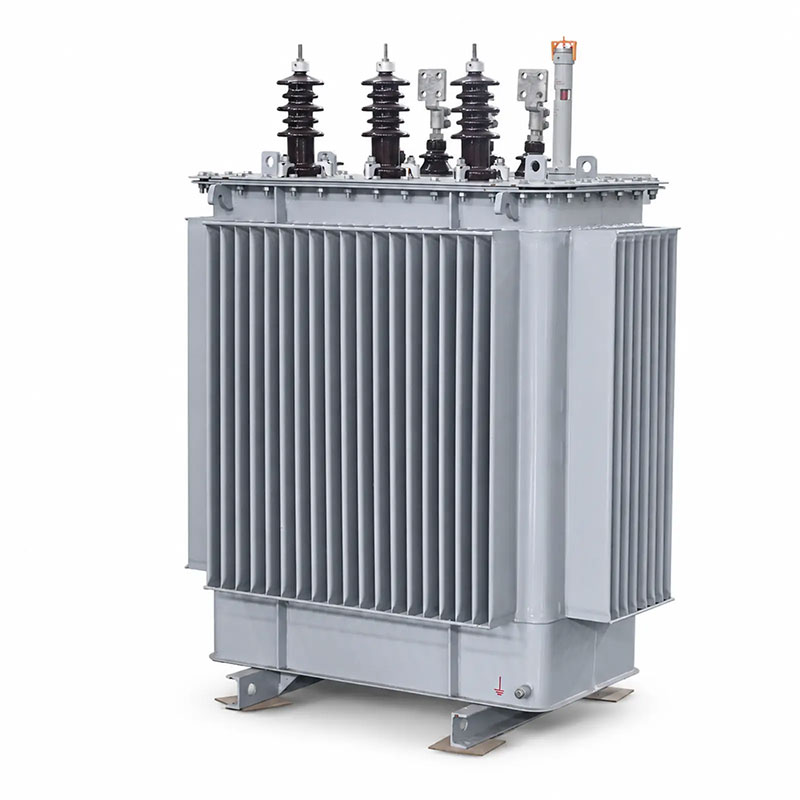
An oil immersed vs dry type transformer decision should begin with the installation site, not with a generic claim that one technology is always better. Both designs can provide reliable distribution service, but they manage insulation, heat, fire risk, ventilation, maintenance, environmental exposure, and space in very different ways.
An oil-immersed transformer places the core and windings inside an insulating liquid. That liquid provides dielectric insulation and transfers heat to the tank walls, corrugations, or radiator banks. A dry-type transformer uses solid insulation around the windings and relies mainly on natural or forced air to remove heat. This basic difference affects nearly every project decision that follows.
يقارن هذا الدليل oil immersed vs dry type transformer options from a project and procurement perspective. It focuses on indoor and outdoor installation, fire strategy, cooling, room ventilation, losses, maintenance, environmental conditions, enclosure design, noise, monitoring, testing, space, and the RFQ information buyers should confirm before choosing a transformer type.
Start With the Installation Site Before Comparing Transformer Types
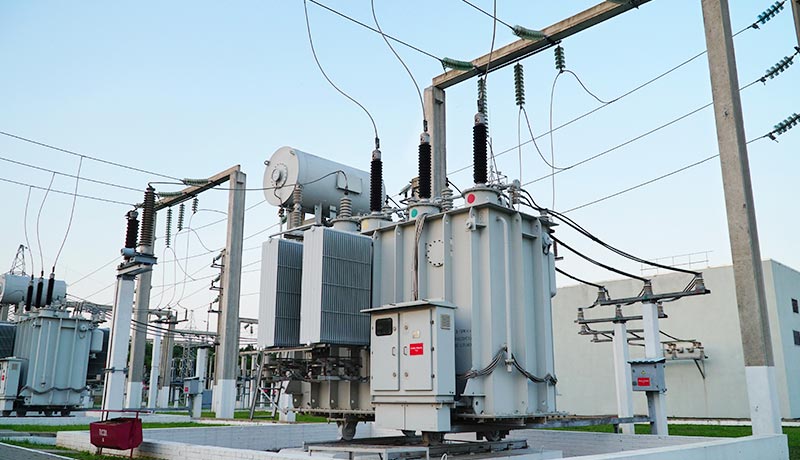
In an oil immersed vs dry type transformer project, the correct transformer type depends first on where the transformer will operate. A unit installed in a dedicated outdoor compound faces different constraints from one installed inside a hospital, commercial building, data center, manufacturing plant, school, or residential development.
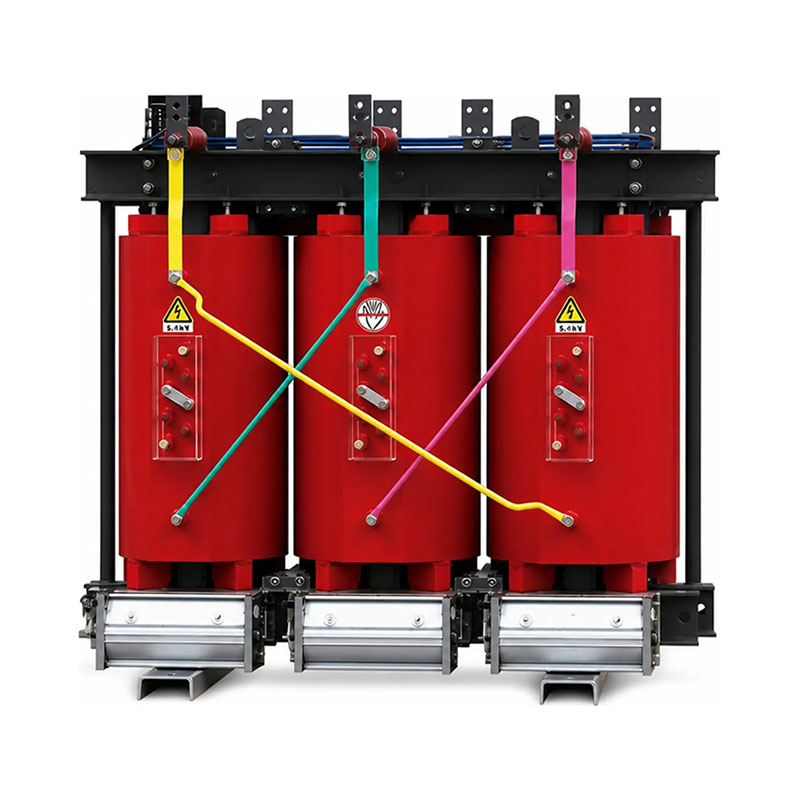
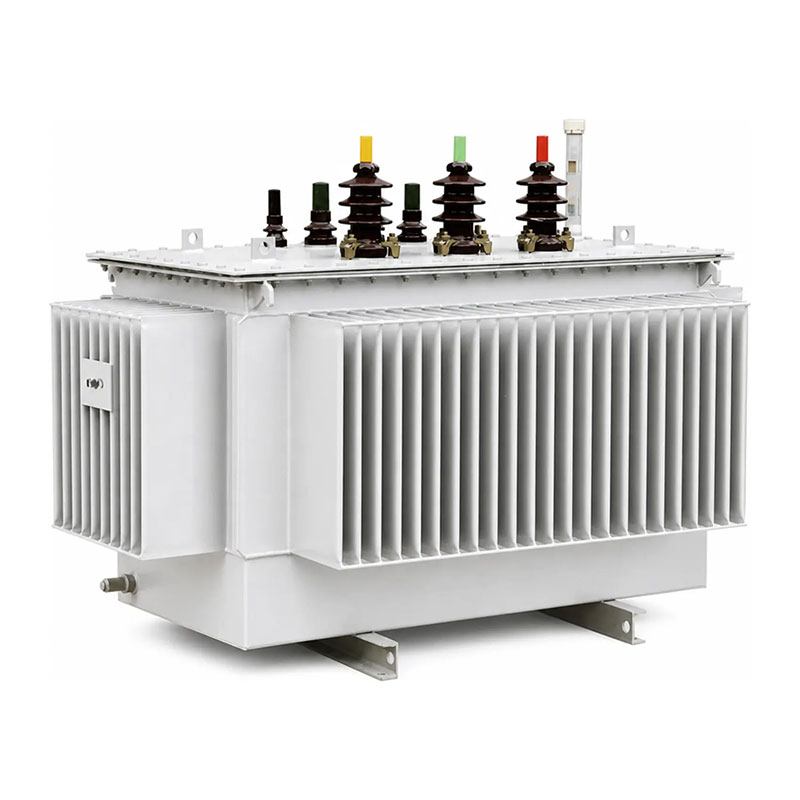
Prennox currently positions its محول توزيع مغمور بالزيت ومختوم بإحكام for utility networks, industrial facilities, outdoor distribution substations, and other project-specific installations. Its محول توزيع من النوع الجاف من الراتنج المصبوب is positioned mainly for indoor power distribution in commercial buildings, industrial facilities, infrastructure projects, data centers, hospitals, schools, and locations where oil-free construction is preferred.
Those application patterns are useful, but they are not absolute rules. An oil immersed vs dry type transformer selection should still review the actual fire code, ventilation, environmental exposure, available space, civil works, maintenance plan, transformer rating, and local utility requirements.
The Core Difference Is the Insulation and Cooling Medium
Oil-immersed transformers use insulating liquid around the active part. The liquid supports electrical insulation and carries heat away from the windings and core. Heat then moves through the tank surface or radiators to the surrounding air.
Dry-type transformers do not use insulating oil. Cast resin designs encapsulate the windings in a solid resin system and use surrounding air for heat removal. Natural-air cooling is common, while fans may be added where forced-air operation is part of the approved design.
This difference drives most oil immersed vs dry type transformer trade-offs and should be documented before the RFQ is released. The oil-filled design needs attention to liquid containment, seals, tank integrity, oil condition, and cooling surfaces. The dry-type design needs attention to ventilation, dust, humidity, enclosure airflow, temperature monitoring, and room heat rejection.
Indoor Installation Often Pushes the Decision Toward Dry Type
In an oil immersed vs dry type transformer indoor comparison, dry-type transformers are commonly selected because they eliminate insulating oil from the electrical room. This can simplify some fire and containment considerations, particularly in occupied buildings or projects where liquid leakage is undesirable.
Prennox’s cast resin product page states that its oil-free construction is suitable for installations where fire risk, maintenance, ventilation, and indoor operating conditions must be considered. It also offers open construction or a protective enclosure according to the installation environment.
However, oil immersed vs dry type transformer selection should not treat “indoor” as a complete specification. A dry-type transformer still needs adequate ventilation, temperature control, access, dust management, sound review, and electrical clearances. If the room cannot remove transformer losses, the unit can operate in an elevated ambient temperature even though there is no oil.
Likewise, oil-immersed transformers can be installed indoors in some jurisdictions and projects when the necessary fire protection, containment, separation, and ventilation provisions are designed appropriately. The final decision belongs to the project engineer and applicable code requirements.
Outdoor Installation Often Favors Oil-Immersed Designs
In an oil immersed vs dry type transformer outdoor comparison, oil-immersed transformers are widely used because the sealed tank protects the active part from the surrounding environment while the liquid and external cooling surfaces support heat transfer.
Prennox’s hermetically sealed oil-immersed transformer uses a corrugated steel tank without a conventional external conservator. The corrugated walls accommodate changes in oil volume during operation while limiting contact between the insulating oil and surrounding air.
In an oil immersed vs dry type transformer outdoor comparison, oil-filled equipment can be attractive where the site has space for a tank, cooling surfaces, maintenance access, and oil-containment provisions. Dry-type transformers can also be installed outdoors, but they typically need a protective enclosure designed for rain, dust, humidity, corrosion, airflow, and the required degree of protection.
The correct question is therefore not “Which transformer is outdoor?” but “Which complete enclosure and cooling system can maintain the required performance at this specific site?”
Fire Strategy Should Be Evaluated at the System Level
Fire safety is one of the most important reasons buyers compare oil immersed vs dry type transformer technologies, and it should be assessed together with the building and site fire strategy.
Oil-filled transformers contain a combustible or otherwise managed insulating liquid depending on the fluid selected. The project may need containment, separation distance, fire barriers, drainage, detection, suppression, or other measures according to local codes and the site fire strategy.
Dry-type cast resin transformers avoid insulating oil, which removes the oil-leak and oil-pool fire scenario. However, “dry type” should not be interpreted as “no fire design required.” The winding insulation, enclosure, cables, ventilation system, room construction, protection settings, and surrounding equipment still need to be included in the fire-safety review.
IEC 60076-11 specifically addresses dry-type transformers and includes environmental, climatic, and fire-behaviour provisions. For oil-immersed transformers, إيك 60076-1 provides the general transformer requirements that form part of the technical basis.
Cooling and Temperature Rise Can Change the Site Design
The two transformer types reject heat differently, so every oil immersed vs dry type transformer study should design the site around the selected cooling path.
Oil-immersed transformers commonly use ONAN cooling in distribution applications, where oil circulates naturally and air moves naturally over the tank or radiator surfaces. Prennox lists ONAN for its current hermetically sealed oil-immersed product.
Cast resin dry-type transformers commonly use AN natural-air cooling, with AF forced-air cooling available when required. Prennox lists both AN and optional AF for its current dry-type product.
In an oil immersed vs dry type transformer comparison, neither cooling system eliminates the need to account for transformer losses. Outdoor oil-filled transformers reject heat directly to ambient air around the tank. Indoor dry-type transformers reject heat into the electrical room, so building ventilation or HVAC must then remove that heat from the room.
إيك 60076-2 covers temperature rise for liquid-immersed transformers. Dry-type thermal requirements are addressed through IEC 60076-11. The project specification should define the applicable temperature-rise limits and cooling mode before final transformer selection.
Room Ventilation Is a Major Dry-Type Design Input
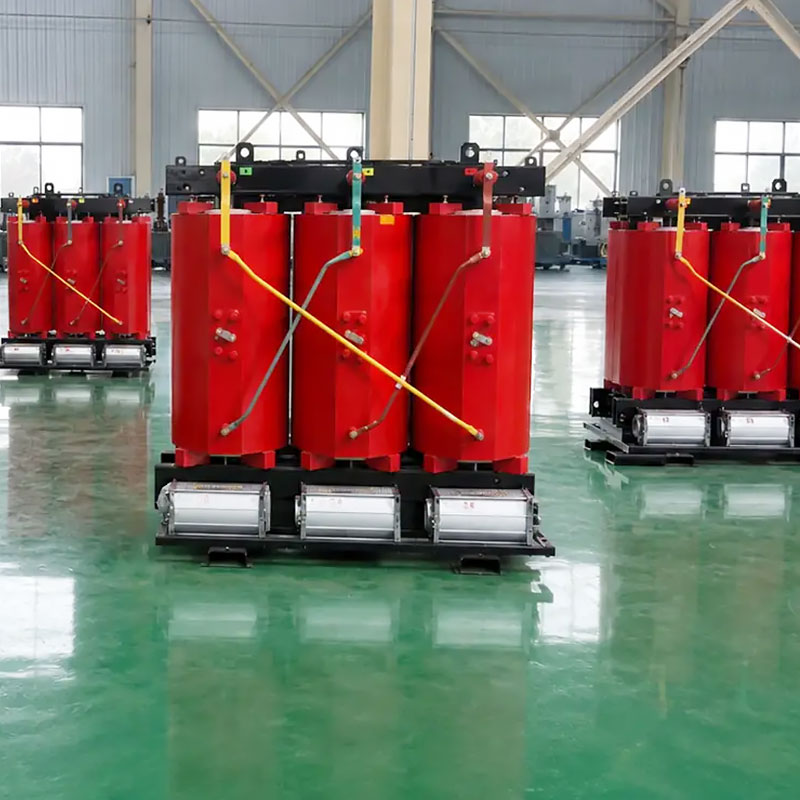
A dry-type transformer can be electrically suitable for an indoor installation but thermally unsuitable for the room if ventilation is inadequate, which makes room heat rejection a core oil immersed vs dry type transformer decision.
The transformer’s no-load and load losses ultimately become heat in the room. If the room cannot exhaust that heat, ambient temperature rises around the transformer, reducing thermal margin and potentially changing fan operation, transformer loading, or equipment life.
This is why an oil immersed vs dry type transformer site study should involve both electrical and mechanical/HVAC teams. The electrical engineer provides transformer loss data; the building engineer uses those losses to size room ventilation or cooling.
For enclosed dry-type units, airflow through the transformer enclosure must also be preserved. A higher IP enclosure or acoustic barrier can affect air movement, so the final transformer rating should be confirmed with the actual enclosure design.
Maintenance Is Different in Kind, Not Simply Higher or Lower
It is common to describe dry-type transformers as “low maintenance” and oil-immersed transformers as “high maintenance.” That is too simple.
Oil-immersed transformers may require attention to oil level, leakage, gaskets, bushings, radiator condition, temperature indicators, pressure devices, and insulating-liquid condition. Depending on transformer size and maintenance program, oil sampling and dielectric or dissolved-gas analysis may be part of condition monitoring.
Dry-type transformers do not require oil sampling, but they still require inspection. Dust accumulation, blocked ventilation paths, loose electrical connections, fan operation, temperature sensors, insulation contamination, and surface tracking can all affect reliability.
A realistic oil immersed vs dry type transformer comparison should therefore ask which maintenance program the site can actually support. A remote outdoor installation with an established utility maintenance team may suit oil-filled equipment well. A building with limited oil-handling capability may favor dry-type construction.
| Site factor | Oil-immersed transformer | Dry-type transformer |
|---|---|---|
| Insulation medium | Liquid insulation around core and windings | Solid insulation with air cooling |
| Typical installation pattern | Common in outdoor and utility/industrial distribution | Common in indoor commercial and infrastructure projects |
| Heat rejection | Tank/corrugations/radiators reject heat to surrounding air | Transformer rejects heat into surrounding room air |
| Liquid containment | May be required by project or code | No insulating-oil containment |
| Maintenance focus | Oil condition, leaks, seals, tank and cooling system | Cleanliness, ventilation, fans, terminals and insulation surfaces |
| Environmental protection | Sealed tank protects the active part | Enclosure selection is critical for outdoor or polluted sites |
Losses Should Be Compared as Guaranteed Project Values
Neither transformer type is automatically more efficient in every rating and design. Core grade, conductor design, flux density, winding resistance, impedance, temperature, loading, and applicable efficiency requirements all influence losses.
Prennox states that guaranteed losses for both its hermetically sealed oil-immersed transformer and cast resin dry-type transformer are confirmed in the approved technical data sheet rather than assigned one universal value to the entire product family.
That is the correct way to compare oil immersed vs dry type transformer options: use the guaranteed no-load loss and load loss for the actual quotations under the same reference conditions.
Do not compare one supplier’s best-efficiency oil design with another supplier’s standard dry design and conclude that the technology itself caused the difference. The comparison must use the same rating, voltage, impedance, temperature basis, and project requirements.
Capacity and Voltage Should Come From the Project, Not a Generic Rule
Oil-immersed transformers are widely used across a broad range of power and voltage levels. Dry-type transformers are also available in many distribution ratings, but their practical range depends on product design, cooling, enclosure, standards, and project needs.
Prennox currently publishes a reference range of 30–1250 kVA for its documented 10 kV hermetically sealed oil-immersed series and 30–2500 kVA for its documented 10 kV cast resin dry-type series. These are published reference ranges for those product series, not universal market limits or evidence that one technology always supports a higher rating.
Therefore, an oil immersed vs dry type transformer project should begin with the required electrical rating and then confirm which product configuration satisfies that requirement.
Environmental Exposure Can Reverse the Obvious Choice
A dry-type transformer may look attractive for an indoor industrial plant, but dust, conductive contamination, humidity, chemicals, or restricted ventilation can make enclosure and maintenance requirements more demanding.
Likewise, an oil-immersed transformer may be attractive outdoors, but flood risk, corrosive atmosphere, extreme temperature, seismic conditions, or environmental restrictions may require additional tank, coating, foundation, containment, and accessory design.
A sound oil immersed vs dry type transformer selection therefore records site temperature, altitude, humidity, pollution, dust, corrosive agents, seismic requirements, flood risk, ventilation, and indoor/outdoor classification before the RFQ is released. This site record should remain part of the oil immersed vs dry type transformer approval package.
Dry-type environmental and climatic requirements should be coordinated with IEC 60076-11 where applicable. Oil-filled equipment should be designed against the applicable project standard and environmental conditions.
Noise Must Be Reviewed for the Complete Installation
Transformer sound can matter in offices, hospitals, schools, residential developments, data centers, and mixed-use buildings. The core, windings, enclosure, fans, radiators, building structure, and room acoustics can all influence the final site result.
In an oil immersed vs dry type transformer comparison, it is not accurate to assume that one type is always quieter. Oil-immersed tanks and radiators can transmit structure-borne sound. Dry-type enclosures and forced-air fans can also contribute to sound.
If sound is a project requirement, the oil immersed vs dry type transformer specification should state a guaranteed sound level and the applicable measurement standard rather than using “low noise” as a marketing phrase.
Oil Containment and Environmental Protection Add Civil Work
For oil-immersed transformers, the site may need oil containment or drainage provisions depending on the insulating liquid, transformer size, location, local regulation, and project fire/environmental strategy.
This civil work should be included in the oil immersed vs dry type transformer comparison because the transformer purchase price does not represent the complete installed system.
Dry-type transformers avoid oil containment, but they may require a larger electrical room, ventilation openings, protective enclosure, acoustic treatment, or additional HVAC capacity. The better project solution is the one that minimizes total installation risk and complexity—not necessarily the one with fewer accessories on the transformer itself.
Enclosure Requirements Can Change Dry-Type Performance
An open dry-type transformer installed in a clean electrical room has different airflow from the same transformer placed inside a high-protection enclosure. The enclosure can restrict natural convection, increase local air temperature, and affect fan arrangement.
Prennox lists open indoor construction or a specified protective enclosure for its dry-type transformer, with enclosure rating confirmed for the actual installation environment.
ل oil immersed vs dry type transformer site selection, buyers should therefore compare the complete dry-type package, including enclosure and ventilation, with the complete oil-immersed package, including tank, radiators or corrugations, containment, and site clearances.
Monitoring and Protection Requirements Are Different
Oil-immersed transformers often use devices related to oil level, oil temperature, pressure, pressure relief, and tank sealing, depending on the design. Hermetically sealed units may use a different accessory set from conservator-type transformers.
Dry-type transformers often use winding temperature sensors, digital temperature controllers, fan start/stop logic, alarm contacts, and trip contacts. Prennox currently lists temperature display, fan control, alarm, and trip functions as available on its cast resin product.
An oil immersed vs dry type transformer RFQ should therefore define the actual monitoring I/O required by the plant or building-management system. Do not assume that the same protection package applies to both technologies.
Testing Should Follow the Transformer Type and Project Standard
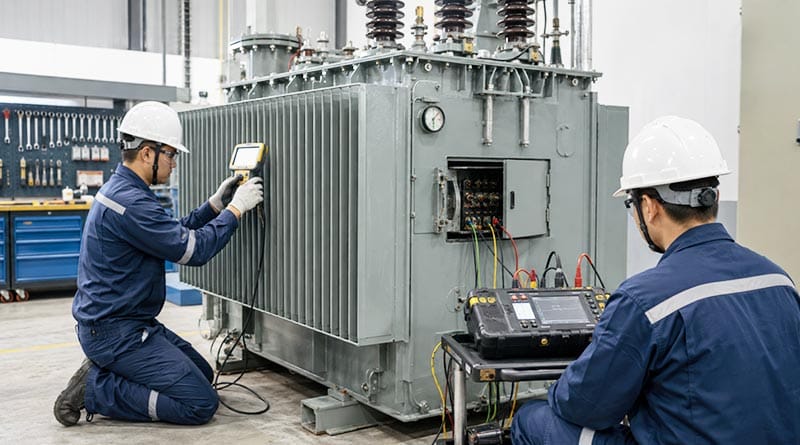
Both transformer types require routine electrical testing, but some tests differ because of their insulation systems and construction.
Prennox lists winding resistance, voltage ratio and vector group, no-load loss/current, load loss/short-circuit impedance, and routine dielectric tests for both documented product families. Oil-immersed units can additionally include tank sealing and oil checks where applicable. Dry-type units can include partial-discharge measurement where applicable, and temperature-rise, sound, environmental, fire-behaviour, or other tests can be agreed when required.
| Test / document area | Oil-immersed | Dry-type |
|---|---|---|
| Routine electrical tests | Required according to applicable transformer standard | Required according to applicable transformer standard |
| Oil / tank checks | Relevant to the liquid-filled system and tank sealing | Not applicable as an oil-system requirement |
| التفريغ الجزئي | Depends on project and transformer design | Commonly relevant to cast resin insulation systems |
| ارتفاع درجة الحرارة | Validated to the applicable liquid-immersed standard | Validated to the applicable dry-type standard |
| Environmental / fire class | Defined by project requirements | Can be specified under IEC 60076-11 where applicable |
Common Oil Immersed vs Dry Type Transformer Selection Mistakes
Choosing Dry Type Only Because It Is Indoors
Indoor location is an important factor, but room ventilation, dust, humidity, sound, enclosure, loading, and maintenance still need to be checked.
Choosing Oil-Immersed Only Because It Is Outdoors
Outdoor installation does not remove the need to review containment, corrosion, flood risk, accessories, maintenance, and transport.
Comparing Purchase Price Instead of Installed Project Scope
ال oil immersed vs dry type transformer comparison should include civil works, containment, enclosure, ventilation, HVAC, fire protection, losses, maintenance, and installation—not only transformer purchase price.
Assuming Dry Type Means Maintenance-Free
Dry-type units still need cleaning, connection checks, ventilation inspection, fan checks where fitted, and insulation-condition monitoring.
Assuming Oil-Immersed Always Has Better Efficiency
Efficiency depends on the actual design and guaranteed losses. Compare the approved loss data for the specific quotations.
How to Build a Better Site-Based Transformer RFQ
مفيد oil immersed vs dry type transformer RFQ should describe the site and operating duty before asking suppliers to recommend a transformer type.
Electrical duty: rated capacity, primary and secondary voltage, frequency, vector group, tapping range, impedance, load profile, harmonics where relevant, and guaranteed loss requirements.
Installation: indoor or outdoor, room dimensions, ventilation, altitude, ambient temperature, humidity, dust, corrosive atmosphere, flood risk, seismic requirement, and available maintenance access.
Safety and environment: fire strategy, oil-containment requirement, environmental classification, enclosure requirement, and any project-specific local code.
Cooling: required natural or forced cooling mode and any fan-control or room-ventilation requirements.
Monitoring: alarms, trip contacts, temperature sensors, oil devices, communication protocol, and BMS/SCADA interfaces.
Testing and documentation: applicable standards, routine tests, special tests, third-party inspection, guaranteed values, drawings, and certificates.
What Prennox Needs Before Reviewing Transformer Selection
For the hermetically sealed oil-immersed product, Prennox asks buyers to provide rated capacity, voltage ratio, frequency, vector group, tapping range, guaranteed loss requirements, applicable standard, installation conditions, required accessories, quantity, and destination. The current product page lists ONAN cooling and a hermetically sealed corrugated tank for the documented series.
For the cast resin dry-type product, Prennox requests rated capacity, voltage ratio, frequency, vector group, tapping range, guaranteed loss requirements, cooling method, enclosure requirements, site conditions, applicable standard, quantity, and destination. The current page lists AN cooling with optional AF, open or protective enclosure construction, and available temperature monitoring functions.
You can review both categories on the محولات التوزيع page. For a detailed dry-type specification checklist, see the earlier مواصفات محولات النوع الجاف لمشتري المشروع article. Project schedules and single-line diagrams can also be sent through the صفحة الاتصال.
خاتمة
There is no universal winner in an oil immersed vs dry type transformer comparison. Oil-immersed transformers can be highly effective for outdoor distribution, utility, and industrial installations where the site can support liquid containment, tank cooling, and oil-related maintenance. Dry-type transformers can be highly effective for indoor, occupied, and oil-sensitive installations where room ventilation, enclosure design, cleanliness, and temperature monitoring are properly managed.
الصحيح oil immersed vs dry type transformer decision should consider fire strategy, cooling, room ventilation, environmental exposure, losses, maintenance capability, noise, enclosure, monitoring, civil works, testing, and complete installed project scope.
Buyers should compare project-specific guaranteed values and site requirements rather than generic oil immersed vs dry type transformer technology claims. The better transformer is the one that fits the electrical duty and the actual site with the least unresolved design risk.
الأسئلة الشائعة
Which is better: oil immersed vs dry type transformer?
Neither is universally better. Oil-immersed transformers often fit outdoor and utility/industrial distribution well, while dry-type transformers often fit indoor and oil-sensitive installations. The correct choice depends on rating, site conditions, fire strategy, cooling, maintenance, enclosure, and project requirements.
Is a dry-type transformer always safer indoors?
Dry-type construction removes insulating oil from the room, which can simplify some fire and containment issues. However, the electrical room still needs proper ventilation, clearances, fire protection, enclosure design, and electrical safety measures.
Do oil-immersed transformers require more maintenance?
They require different maintenance. Oil-filled equipment may need oil-condition monitoring, leak inspection, seal checks, tank and radiator inspection, while dry-type equipment needs cleaning, ventilation checks, fan checks, terminal inspection, and insulation-surface monitoring.
Which transformer type is more efficient?
Efficiency depends on the actual design and guaranteed no-load and load losses. An oil immersed vs dry type transformer comparison should use project-specific guaranteed values under the same rating and test conditions rather than assuming one technology is always more efficient.
What information should be included in an oil immersed vs dry type transformer RFQ?
Provide capacity, voltages, frequency, vector group, taps, impedance, loss requirements, load profile, indoor/outdoor location, ambient conditions, ventilation, fire and containment requirements, cooling, enclosure, monitoring, applicable standards, tests, quantity, and destination.