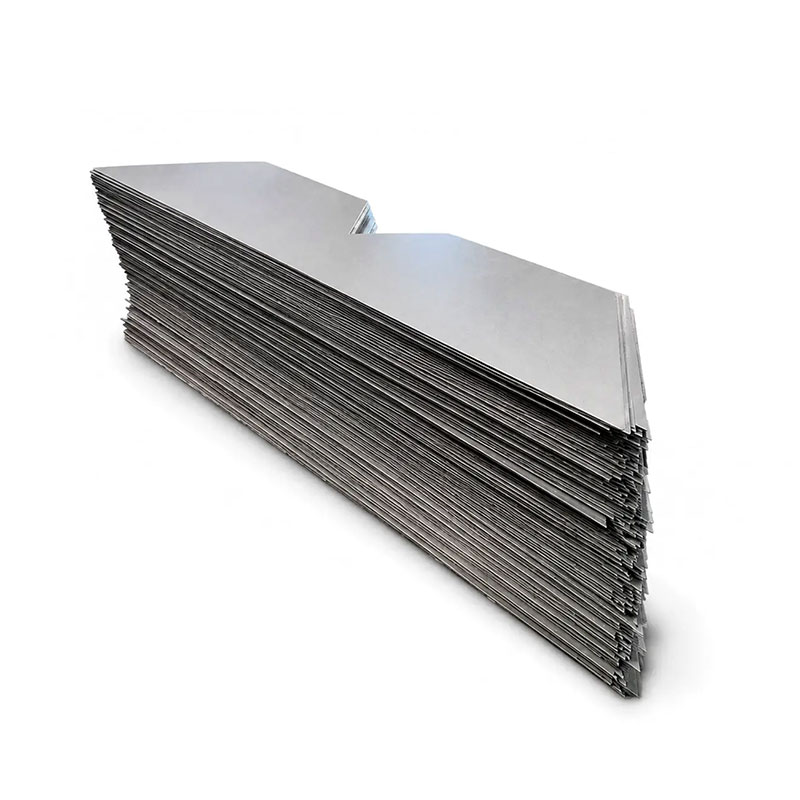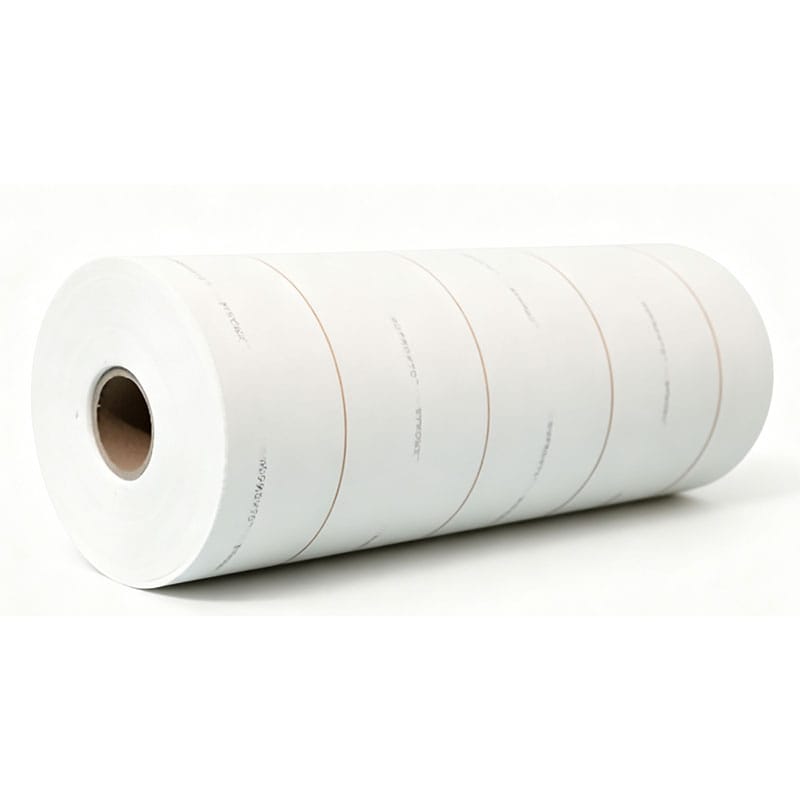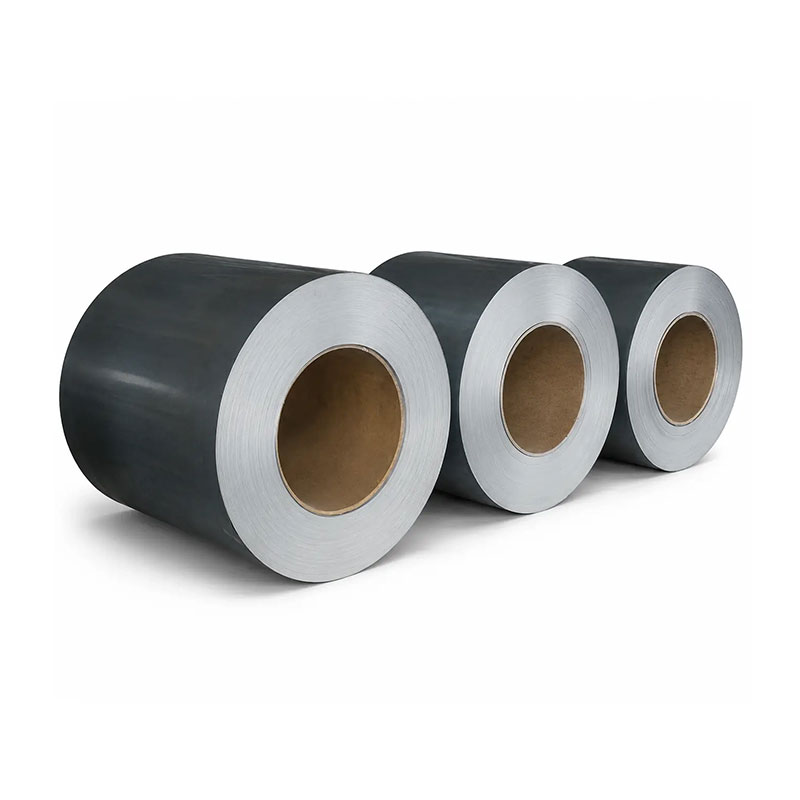
CRGO slit coils are grain-oriented electrical steel coils that have been slit from a wider parent coil into narrower widths for transformer core production. The material grade may remain the same as the parent coil, but the slitting process introduces a new set of purchasing controls: final strip width, width tolerance, burr height, edge condition, coil inner diameter, finished coil weight, winding quality, identification, and packaging.
For transformer manufacturers, these details matter because slit strip often feeds directly into cut-to-length lines, miter-cutting equipment, lamination production, or wound-core processing. A coil that has the correct magnetic certificate but the wrong slit width, excessive burr, poor edge shape, unstable winding, or unsuitable finished coil weight can disrupt production even though the parent material itself is acceptable.
This guide explains how to specify CRGO slit coils for transformer manufacturing. It focuses on the difference between material grade and supply form, how width tolerance should be controlled, why burr and edge geometry matter, what coil configuration should be stated in an RFQ, and how incoming inspection can verify that the slit product is suitable for downstream core production.
CRGO Slit Coils Are a Supply Form, Not a New Magnetic Grade
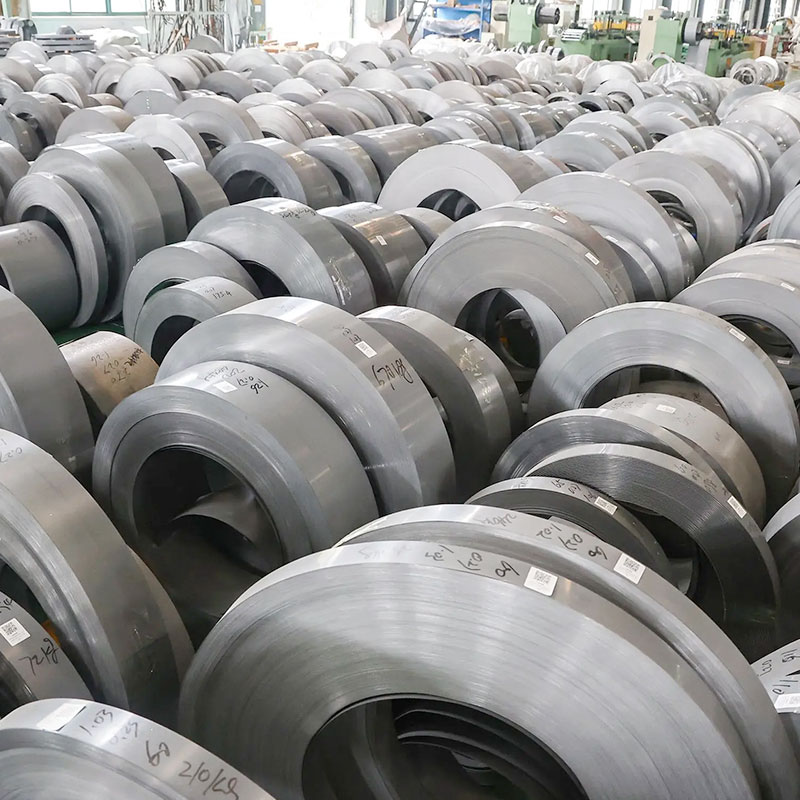
The first point buyers should understand is that slitting does not create a new electrical steel grade. CRGO slit coils are made by taking a parent grain-oriented electrical steel coil and cutting it longitudinally into narrower strips.
The parent coil can be conventional GOES, high-permeability GOES, or another approved grain-oriented grade. Prennox’s current CRGO Electrical Steel Slit Coils & Strips page states that conventional and high-permeability GOES can be supplied in slit form, subject to confirmation of magnetic properties, thickness, slit width, tolerance, and coil dimensions.
This means the magnetic specification and the dimensional slitting specification should be reviewed separately. A purchase order should identify both the approved parent grade and the required slit configuration. Writing only “CRGO strip” leaves too much open to interpretation.
Start With the Parent Material Grade and Thickness
Before defining width, confirm which electrical steel is being slit. IEC 60404-8-7:2020 covers fully processed cold-rolled grain-oriented electrical steel strip and sheet and groups grades into conventional, high-permeability, and magnetic-domain-refined high-permeability classes. It also addresses magnetic properties, geometrical characteristics, tolerances, technological characteristics, and inspection procedures.
For CRGO slit coils, the RFQ should therefore identify the required grade or approved magnetic-property range together with nominal thickness. Prennox currently publishes 0.23, 0.27, and 0.30 mm as available nominal thicknesses on its slit-coil page. The final grade and magnetic performance remain linked to the confirmed parent material and inspection certificate.
Do not use slit width as a substitute for grade identification. Two 120 mm-wide slit coils can have different thicknesses, magnetic properties, coatings, or domain-refinement conditions.
Slit Width Should Match the Downstream Core Geometry
The required width of CRGO slit coils normally comes from the transformer core design. In laminated-core manufacturing, strip width may correspond to limb packets, yoke packets, or cut-to-length lamination dimensions. In wound-core production, strip width may correspond directly to the intended core build.
A transformer factory should therefore choose slit width from the approved core drawing and processing route, not from a supplier’s preferred inventory width.
If multiple packet widths are used in the same core, each slit width should be listed separately with quantity and tolerance. If the same parent material is being divided into several widths, the buyer may also want the supplier to provide a slitting layout or yield plan so the final coil quantities can be reconciled with the parent-coil weight.
Nominal Width and Accepted Width Are Not the Same Thing
A nominal value such as 100 mm only defines the target. The purchasing specification should also define the permitted deviation from that target. For CRGO slit coils, width tolerance can affect packet dimensions, lamination geometry, stack alignment, winding build, and the setup of downstream cutting equipment.
For CRGO slit coils, the correct tolerance should come from the transformer manufacturer’s process and drawing requirements. Tighter tolerance is not automatically better if the downstream process does not need it, but an undefined tolerance creates unnecessary risk.
Width Tolerance Should Be Written Into the RFQ
Prennox’s slit-coil page states that width tolerance and edge requirements are confirmed before production rather than assigned one universal value. This is the correct purchasing approach because different transformer-core processes can require different precision.
For example, strip feeding into an automated cut-to-length line may need stable width so guides and stops remain aligned. A strip used in a packeted laminated core may need close width matching between adjacent packets. A wound-core process may be sensitive to cumulative build and strip tracking.
A practical CRGO slit coils specification should state nominal width, positive and negative tolerance, measurement method where necessary, and whether the tolerance applies across the full coil length or to sampled locations.
Burr Height Is a Core-Manufacturing Issue, Not Just a Cosmetic Defect
Longitudinal slitting creates cut edges. If the slitting knives are worn, incorrectly set, or poorly aligned, the strip can develop excessive burr. Burr is important because it can interfere with stacking, increase local interlaminar contact, change physical stack height, damage adjacent coatings, and make handling more difficult.
IEC 60404-9:2018 specifies methods for determining geometrical characteristics of electrical steel strip and sheet, including edge wave, residual curvature, edge camber, deviation from the shearing line, and burr height. It also clarifies burr-height measurement and treats the maximum value as the characteristic.
For buyers of CRGO slit coils, this means “clean edge” is not a strong inspection requirement. If burr matters to the core process, define a measurable limit and the agreed measurement method.
| Slitting characteristic | Why it matters | What the RFQ should define |
|---|---|---|
| Nominal slit width | Controls packet or strip geometry | Target width for each slit coil |
| Width tolerance | Affects downstream fit and process stability | Permitted positive/negative deviation |
| Burr height | Can affect stacking and interlaminar contact | Maximum permitted burr and test method |
| Edge camber | Can cause strip tracking problems | Acceptance method where relevant |
| Edge wave | Can disturb feeding and stacking | Inspection requirement for sensitive processes |
| Residual curvature | Affects flatness during cutting or stacking | Acceptance requirement where needed |
Edge Camber and Strip Tracking Can Disrupt Automated Lines
A strip can meet average width and still track poorly if the slit edge curves gradually along the coil length. This condition, commonly evaluated as edge camber, matters when CRGO slit coils feed through straightening, measuring, miter-cutting, punching, or automatic stacking equipment.
IEC 60404-9 includes a method for measuring edge camber, which gives transformer manufacturers a common reference when edge straightness is part of the acceptance requirement.
The required limit should reflect the actual line capability. If a process can compensate for small deviations, there may be no reason to impose a needlessly tight value. If a high-speed line requires stable strip tracking, the limit should be written before the order.
Slitting Can Affect the Edge Region Without Changing the Parent Grade
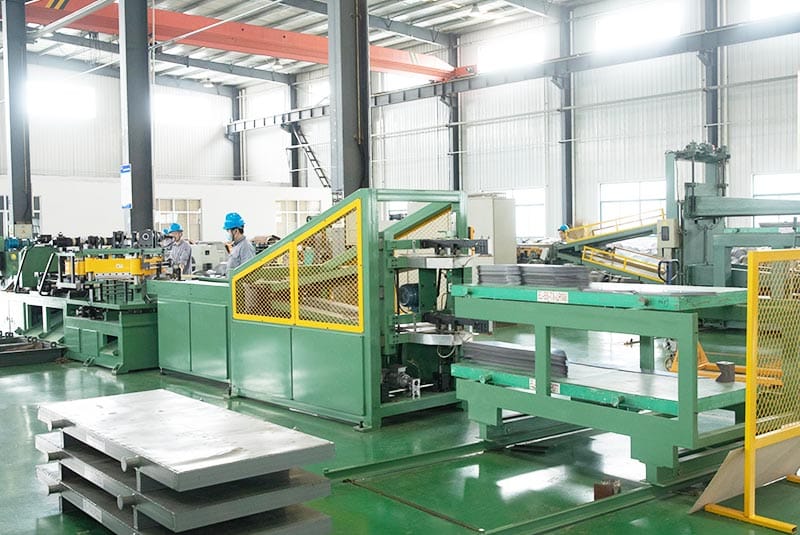
Slitting introduces localized mechanical stress near the cut edge. The effect is concentrated close to the edge and does not mean the entire coil has become a different magnetic grade. However, edge stress can influence magnetic behavior locally, especially when narrow strips have a high ratio of edge-affected material to total strip width.
This is one reason CRGO slit coils should be purchased with the downstream core geometry in mind. Very narrow strips may respond differently to slitting quality than wide strips even when both come from the same parent coil.
Buyers should also avoid treating a parent-coil magnetic certificate as proof that every possible slit configuration will produce identical finished-core loss. Core loss ultimately depends on material, strip width, cutting, joint design, stacking, stress, and transformer operating conditions.
Coil Inner Diameter Must Match Handling and Feeding Equipment
Prennox currently publishes a 510 mm coil inner diameter for its CRGO slit coils product. The buyer should confirm whether this CRGO slit coils configuration matches the factory’s decoiler, mandrel, lifting equipment, and storage system.
If the transformer plant uses a different coil-ID standard, that should be stated before production. Adapters may be possible, but they can change line setup and handling.
The RFQ should also define whether the finished strip needs a core, sleeve, or particular winding orientation. A mechanically stable coil is important because narrow slit strips can telescope or deform if winding tension and packing are poorly controlled.
Finished Coil Weight Should Be Chosen for the Production Line
Parent GOES coils can weigh several tons, but a finished slit coil does not need to retain that weight. Prennox currently states that parent coils are typically 3–5 metric tons, while finished coil weight is arranged according to slit width and the agreed coil configuration.
This gives the buyer an opportunity to specify a finished weight that matches factory handling. Very heavy CRGO slit coils can exceed decoiler capacity or lifting limits. Very light coils may create too many coil changes and reduce production efficiency.
A useful RFQ can state preferred net weight, maximum outer diameter where relevant, and whether partial coils are acceptable. If exact weight cannot be guaranteed because of parent-coil yield, define an acceptable range rather than one unrealistic target.
Winding Quality Matters for Storage and Line Feeding
Finished slit coils should be wound evenly enough to remain stable during handling and to feed smoothly into downstream equipment. Poorly wound coils may telescope, develop loose wraps, create edge damage, or become difficult to mount.
For CRGO slit coils, the purchasing specification can define acceptable coil build, edge alignment, winding tightness, protective edge material, and whether banding is applied through the eye or around the circumference.
These details become more important as strip width decreases because narrow strip can be more vulnerable to deformation and unstable winding.
Surface Coating Must Be Protected During Slitting
Grain-oriented electrical steel is supplied with an insulating surface coating that helps reduce interlaminar current and supports core processing. Slitting should preserve that coating over the strip surface as much as practical.
A CRGO slit coils inspection should therefore look for scratches, coating damage, rust, dents, contamination, and handling marks in addition to dimensional checks.
IEC 60404-8-7 covers technological characteristics and inspection procedures for fully processed GOES, while the buyer’s project specification should state any additional surface-quality expectations.
If the slit material is used for a low-loss laminated core, avoid uncontrolled mechanical handling that adds unnecessary stress or coating damage before lamination cutting begins.
Magnetic Certificates Should Remain Traceable to the Parent Coil
Slitting creates several daughter coils from one parent coil. The magnetic certificate is typically linked to the parent material batch or coil, so traceability must be preserved after slitting.
Each finished CRGO slit coils package should therefore carry identification that can be linked back to the parent grade, parent coil or batch, nominal thickness, slit width, and inspection certificate.
For magnetic-property review, IEC 60404-3:2022 defines the single-sheet tester method for measuring AC magnetic properties of electrical steel strip and sheet at power frequencies.
The buyer should confirm that the reported magnetic properties correspond to the approved grade and test conditions, but should not expect the slitting supplier to create a new magnetic grade simply because the coil has been narrowed.
Laser-Scribed Material Needs Extra Process Review Before Slitting
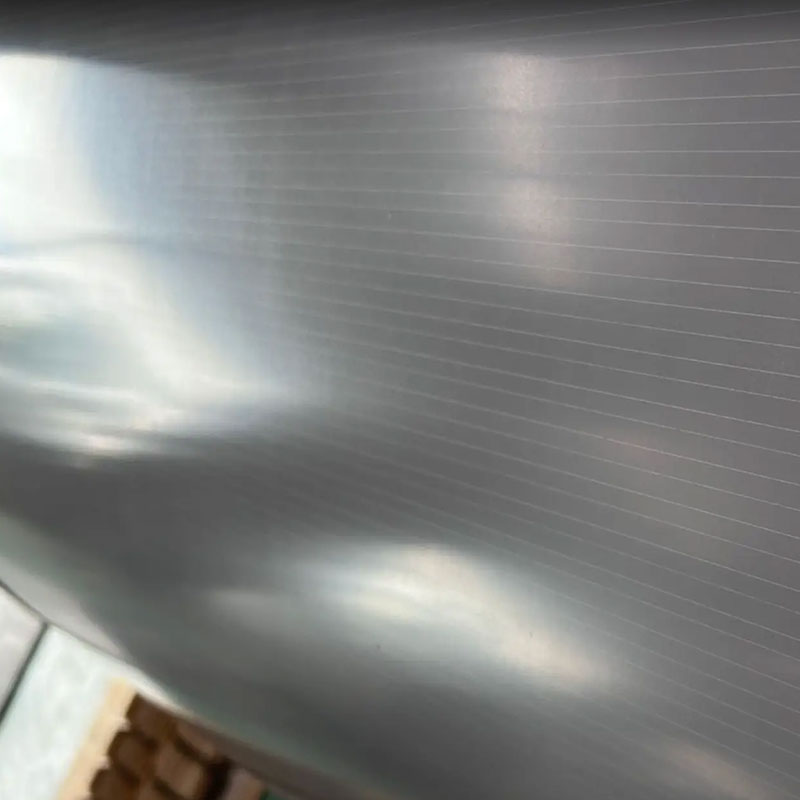
If the parent material is domain refined, the buyer should confirm how the selected CRGO slit coils will be processed after slitting. Laser-scribed electrical steel can have important downstream heat-treatment restrictions.
The earlier Laser Scribed Electrical Steel and Processing Limits guide explains why conventional laser domain refinement can be reduced or lost by later stress-relief annealing unless the specific grade is approved for that process.
Slitting itself does not automatically remove the laser-scribed condition, but the complete core route—including cutting, forming, and heat treatment—should be reviewed before the material is approved.
Incoming Inspection Should Separate Material Checks From Slitting Checks
A useful receiving plan for CRGO slit coils has two layers. The first verifies the parent material: grade, thickness, magnetic report, coating, and traceability. The second verifies the slit product: width, tolerance, burr, edge shape, coil dimensions, winding quality, identification, and packaging.
| Incoming check | What to verify | Typical problem prevented |
|---|---|---|
| Grade and batch | Match coil label to inspection certificate | Wrong parent material released to production |
| Thickness | Confirm nominal thickness and approved grade | Core build differs from design |
| Slit width | Measure against nominal width and tolerance | Packet or wound-core geometry mismatch |
| Burr | Check cut-edge burr using agreed method | Stacking and insulation problems |
| Edge shape | Review camber, wave or curvature where required | Strip feeding and alignment problems |
| Coil ID / OD / weight | Confirm compatibility with handling equipment | Decoiler and lifting problems |
| Surface condition | Check coating, rust, dents and contamination | Core-quality and handling issues |
| Packing and labels | Confirm width, grade, batch and coil identity | Traceability loss or coil mix-up |
Packaging Should Protect Edges, Shape and Traceability
Slit edges are more exposed than the broad faces of a full-width coil. Packaging should therefore protect against impact, moisture, rust, edge dents, telescoping, and label loss.
Prennox states that coil configuration and packing for CRGO slit coils are arranged according to material protection and handling requirements.
For export shipments, buyers should define moisture protection, edge protectors, pallet or skid requirements, lifting method, anti-rust measures where approved, and whether individual coils need separate identification. If multiple slit widths are packed in one shipment, labels should make width and batch immediately clear to receiving personnel.
Common CRGO Slit Coils Ordering Mistakes
Ordering by Width Only
Width does not define grade, thickness, magnetic properties, burr, edge condition, coil ID, weight, or packing. CRGO slit coils need both a material specification and a slitting specification.
Using “No Burr” as the Acceptance Requirement
Every sheared edge has some measurable condition. If burr matters, define a maximum value and an agreed measurement method instead of using an absolute phrase that cannot be verified consistently.
Ignoring Finished Coil Weight
A slit coil that exceeds decoiler or crane capacity can disrupt production even if width and material are correct.
Assuming the Parent Coil Certificate Guarantees Finished Core Loss
The certificate verifies material properties under specified test conditions. Finished core performance also depends on slitting, cutting, joints, stacking, stress, and transformer design.
Failing to Preserve Parent-Coil Traceability
Once a parent coil becomes multiple daughter coils, each finished package should retain a clear link to grade, batch, and inspection certificate.
What to Include in a CRGO Slit Coils RFQ
A strong CRGO slit coils RFQ should state the material and the converted-coil requirements separately.
Parent material: grade or target magnetic properties, nominal thickness, coating condition, and required inspection certificate.
Slit dimensions: nominal width for each strip, positive/negative tolerance, required quantities, and any edge-camber or flatness requirements.
Edge quality: maximum burr or another agreed edge requirement and the measurement basis.
Coil configuration: inner diameter, preferred finished coil weight, maximum outer diameter where needed, winding orientation, sleeve/core requirement, and whether partial coils are acceptable.
Downstream process: state whether the strip will be used for cut-to-length laminations, miter cutting, step-lap production, or wound-core manufacturing.
Packing and documentation: define moisture protection, edge protection, labels, parent-coil traceability, test certificates, quantity, destination, and annual demand where useful.
What Prennox Needs Before Reviewing a Slit-Coil Order
Prennox currently asks buyers to provide the parent material grade or target magnetic properties, thickness, slit width, width tolerance, edge or burr requirements where applicable, coil inner diameter, preferred finished coil weight, quantity, estimated annual demand, destination, packing requirements, and inspection-certificate needs.
The product page currently lists 0.23, 0.27, and 0.30 mm nominal thicknesses, an 800–1000 mm parent-coil width, a 510 mm coil inner diameter, and parent-coil weight typically in the 3–5 metric ton range. These are published supply parameters, not recommendations that every transformer plant should order the same coil configuration.
If you are still deciding the material grade, review the CRGO Steel Grades and Test Reports guide. If the slit strip will be cut into laminated-core parts, the Transformer Core Drawing Requirements article can help define packet widths and lamination geometry. Project specifications can also be sent through the Contact page.
Conclusion
CRGO slit coils should be specified as a combination of parent electrical-steel requirements and downstream slitting requirements. The grade, thickness, coating, and magnetic certificate define the material basis; slit width, tolerance, burr, edge geometry, coil ID, finished weight, winding quality, packaging, and traceability define whether that material can move smoothly into transformer core production.
The most common sourcing mistake is to focus on slit width and ignore everything that happens at the cut edge and in the finished coil package. For automated lamination lines and precision core production, those dimensional and handling details can be just as important as the material grade itself.
When the RFQ aligns the approved CRGO grade with the actual cut-to-length, laminated-core, or wound-core process, slit-coil purchasing becomes easier to inspect, easier to compare, and less likely to create production delays.
FAQ
What are CRGO slit coils?
CRGO slit coils are grain-oriented electrical steel parent coils that have been slit longitudinally into narrower strip widths for transformer core production. Slitting changes the delivery form and dimensions but does not create a new magnetic grade.
What width tolerance should be used for CRGO slit coils?
The correct tolerance depends on the transformer core drawing and downstream equipment. It should be specified by the buyer according to packet geometry, cut-to-length line capability, wound-core process, and inspection needs rather than using one universal value.
Why is burr height important on slit electrical steel?
Excessive burr can interfere with stacking, increase local interlaminar contact, affect physical stack height, and create handling problems. IEC 60404-9 provides a standardized method for measuring burr height and other strip geometrical characteristics.
Does slitting change the magnetic grade of CRGO?
No. The parent grade remains the material grade. However, slitting introduces edge stress and dimensional characteristics that can influence downstream core performance, especially for narrow strips or poor-quality edges.
What information should be included in a CRGO slit coils RFQ?
Provide parent grade or target magnetic properties, thickness, slit width and tolerance, burr or edge requirements, coil inner diameter, preferred finished coil weight, downstream core process, quantity, packing, destination, and inspection-certificate requirements.